



A Guide to Custom Healthcare Applications
Imagine trying to treat every patient with the exact same medication, regardless of their specific illness. It sounds absurd, right? Yet, many healthcare organizations find themselves stuck with generic, off-the-shelf software that works on a similar, flawed principle.
Custom healthcare applications are the antidote. Think of them less like a mass-produced pill and more like a personalized treatment plan designed specifically for your organization’s unique workflows, challenges, and goals.
Why Custom Healthcare Applications Are a Game Changer
In the high-stakes world of healthcare, generic software often forces brilliant professionals to twist their processes to fit clunky, inefficient systems. This is more than just an inconvenience; it can be a barrier to quality care. This is precisely why a custom-built solution isn’t a luxury; it’s a strategic necessity.
Custom healthcare applications are developed from the ground up to solve the specific problems that off-the-shelf products can’t touch. They address your particular operational gaps, patient needs, and complex regulatory requirements head-on.

This shift is crucial for moving from simply reacting to health issues to proactively managing them. Instead of just being a digital filing cabinet for patient visits, these applications become active tools that can genuinely improve health outcomes. They do this by focusing on core strategic goals:
-
Boosting Patient Engagement: By creating intuitive patient portals and mobile apps, you give people direct control over their health information, appointment scheduling, and communication with their care team.
-
Simplifying Clinical Workflows: Well-designed interfaces and smart automation tools can drastically cut down on the administrative busywork that burns out clinicians. This means fewer data entry errors and more time for what matters: patient care.
-
Turning Data into Predictive Insights: By integrating advanced analytics and AI, these systems can spot at-risk patients sooner, forecast disease progression, and give clinicians the data-driven support they need to make better decisions.
The Soaring Demand for Tailored Digital Health
The industry is voting with its budget, and the numbers are staggering. The global healthcare mobile application market, which is a huge part of custom healthcare applications, shot up from USD 114.17 billion in 2024 to an estimated USD 165.61 billion in 2025.
Even more impressive, forecasts show the market reaching an incredible USD 1,070.58 billion by 2030. That’s fueled by a compound annual growth rate (CAGR) of 45.2% from 2025 onward. You can read the full research about this market growth to see just how big this shift is. This explosive growth isn’t just a trend; it’s a clear signal that bespoke digital tools are fundamentally changing how patient care is delivered around the world.
Off-the-Shelf vs. Custom Healthcare Software
Deciding between a pre-packaged solution and a custom build is a critical choice. Off-the-shelf software might seem faster and cheaper initially, but its limitations often create hidden costs and frustrations down the road. Custom applications, while a bigger upfront investment, are designed to fit your operations like a glove, delivering long-term value and a much stronger return on investment.
This table breaks down the key differences to help you see why a custom approach often wins out in the complex healthcare environment.
| Feature | Off-the-Shelf Software | Custom Application |
|---|---|---|
| Functionality | Generic, pre-defined features that may not match your needs. | Built specifically to solve your unique problems and workflows. |
| Scalability | Limited. May struggle to grow with your organization. | Highly scalable and designed to evolve with your future needs. |
| Integration | Can be difficult to integrate with existing legacy systems (EHR/EMR). | Designed for seamless integration with your entire tech stack. |
| Compliance | General compliance (HIPAA, GDPR), but may lack specific safeguards. | Compliance is built into the core architecture to meet your exact needs. |
| User Experience (UX) | Standardized UI/UX that forces users to adapt. | Intuitive and user-centric, designed for your specific staff and patients. |
| Competitive Edge | None. You're using the same tool as your competitors. | Creates a unique, proprietary asset that sets you apart. |
| Long-Term Cost | Lower initial cost, but high costs for licenses, customizations, and workarounds. | Higher initial investment, but lower total cost of ownership over time. |
Ultimately, a custom application isn’t just software; it’s a strategic asset that can streamline operations, improve patient care, and give you a real competitive advantage.
Of course, transforming a brilliant digital health concept into a compliant, user-friendly, and effective tool requires a partner with deep technical skill and genuine industry knowledge. Working with an experienced AI solutions partner is often the key to success. They can ensure the final product not only checks all the boxes but also delivers measurable results that improve patient outcomes and your bottom line. The journey starts with expert healthcare software development that truly gets the nuances of this demanding field.
Real-World Use Cases Transforming Patient Care
The real value of a custom healthcare application isn’t measured in lines of code, but in the real-world difference it makes for patients and clinical teams. These specialized digital tools are moving well past the theoretical stage and are now making a tangible impact in hospitals, clinics, and even patients’ living rooms.
By zeroing in on specific, nagging problems, these apps deliver results that generic, one-size-fits-all software just can’t touch. Whether it’s helping someone manage a chronic condition from home or breaking down the distance between a patient and a specialist, custom solutions are fundamentally changing how care is delivered.

Enhancing Chronic Disease Management with RPM
One of the clearest and most powerful examples is Remote Patient Monitoring (RPM). Picture a patient living with congestive heart failure. Instead of frequent, stressful trips to the clinic, they use a simple, connected app on their phone to track their daily weight, blood pressure, and oxygen levels.
This vital data flows directly and securely to their care team. This allows clinicians to spot dangerous trends and step in before a full-blown crisis sends the patient back to the hospital. It’s a proactive model that’s been shown to slash hospital readmissions for chronic conditions by over 38%.
These custom RPM platforms are so much more than simple data trackers. They are complete care ecosystems, often including:
-
Automated Alerts: Clinicians get an immediate notification if a patient’s readings ever cross a dangerous threshold.
-
Educational Content: Patients receive personalized advice and information to help them better understand and manage their own health.
-
Secure Messaging: A direct line of communication between patients and providers builds trust and makes it easier to stick to the care plan.
Bridging Gaps with Bespoke Telehealth Platforms
Sure, there are plenty of off-the-shelf telehealth products out there, but they often fall short when faced with unique challenges. A custom telehealth application can be built from the ground up to serve specific groups, like people in rural areas far from specialists or patients who have particular communication needs.
By designing a platform from scratch, an organization can integrate specialized diagnostic tools, build workflows for different types of consultations (like mental health versus dermatology), and guarantee a smooth, intuitive experience for everyone involved.
This targeted approach makes a huge difference. It improves access to care, cuts down on patient travel time and expense, and helps providers manage their schedules more effectively. As we explored in our guide, creating a patient journey mapping tool is often the critical first step in designing a telehealth system that actually works for the people it’s meant to serve.
Combating Clinician Burnout with Smarter EHR Workflows
Clinician burnout is a massive problem in healthcare, and clunky, frustrating Electronic Health Record (EHR) systems are a big part of the reason why. Custom applications can work as an intelligent layer over an existing EHR, simplifying and automating the repetitive tasks that drain a clinician’s day.
For instance, a custom workflow app could:
-
Automate Prescription Refills: Based on pre-approved clinical rules, the app can automatically queue up routine refill requests, saving doctors from endless clicking.
-
Streamline Charting: Using voice-to-text powered by Natural Language Processing (NLP), a doctor can dictate patient notes, and the app will automatically identify and tag the important medical terms.
-
Provide At-a-Glance Summaries: The app can pull the most critical patient data from the EHR and display it on a clean dashboard designed specifically for a specialist’s needs.
These focused fixes give clinicians their most precious resource back: time. That means more time for meaningful patient conversations and less of the administrative grind that leads to exhaustion.
Building a Secure and Scalable App Architecture
Behind every great custom healthcare application is a solid architectural blueprint: one designed for security, scale, and whatever the future throws at it. This technical foundation is what separates a reliable, compliant tool from a risky, unmanageable one. Getting this right isn’t just about picking the trendiest tech; it’s about making smart, strategic choices that protect patient data and let your application grow without friction.
Think of it like building a hospital. You wouldn’t just start laying bricks without a detailed plan for the electrical grid, plumbing, and security systems. In the same way, your app’s architecture is the essential infrastructure that underpins every feature, every user interaction, and every single piece of sensitive data.

Choosing the Right Cloud Foundation
The first big decision is figuring out where your application will “live.” For healthcare, the cloud is the clear winner, offering a level of security, scalability, and reliability that on-premise servers simply can’t match. The big three providers: Amazon Web Services (AWS), Microsoft Azure, and Google Cloud Platform (GCP), all offer HIPAA-compliant services to get you started.
The best choice often boils down to your specific needs:
-
AWS has the most extensive range of services and a very mature ecosystem for healthcare solutions.
-
Azure is a natural fit for organizations already deeply invested in the Microsoft stack.
-
GCP really shines with its data analytics and machine learning capabilities, making it perfect for apps focused on predictive insights.
A strong foundation in the cloud isn’t just about renting server space. It’s about tapping into a suite of tools built for high security and constant availability: things like managed databases, automated backups, and disaster recovery that keep your app online and your data safe, no matter what happens.
Designing for Growth with Microservices
As your user base expands and you bolt on new features, a traditional monolithic application, where everything is tangled together, can become a sluggish, unwieldy beast. The modern way forward is a microservices architecture.
Imagine your app not as a single jack-of-all-trades, but as a coordinated team of specialists. Each specialist (a microservice) handles one specific job: patient authentication, appointment scheduling, or billing. They talk to each other, but they operate independently. This model brings some incredible advantages:
-
Independent Scaling: If your scheduling feature is suddenly swamped with traffic, you can give just that one service more resources without touching the rest of the app.
-
Faster Updates: Need to update the billing service? You can do it without the fear of accidentally breaking patient logins.
-
Technology Flexibility: You’re free to build each service with the best tool for that specific job.
This approach keeps your application nimble, allowing it to evolve without needing a complete, ground-up rebuild. As we explored in our guide, building cloud-native apps digs deeper into creating these kinds of flexible solutions.
The API-First Mindset for Seamless Integration
In the world of healthcare, no application is an island. It has to talk to Electronic Health Records (EHRs), lab systems, billing software, and even wearable devices. An API-first design is what makes these connections work smoothly and securely.
Instead of building your app and then trying to duct-tape it to other systems, you start by designing its Application Programming Interfaces (APIs). Think of APIs as secure, standardized “doors” that let different systems share data in a controlled, predictable way. It’s an essential strategy for achieving real interoperability and building a truly connected health ecosystem.
Embedding Compliance from Day One
Security and compliance, especially with regulations like HIPAA and GDPR, can’t be an afterthought you sprinkle on at the end. They have to be baked into the architecture from the very first line of code.
This means building in security at every single layer:
-
Data Encryption: All Protected Health Information (PHI) must be encrypted, both in transit (as it moves over a network) and at rest (when it’s sitting in a database).
-
Robust Authentication: Implementing multi-factor authentication (MFA) and strict role-based access controls is key to ensuring only authorized users see sensitive data.
-
Comprehensive Audit Trails: Your system must log every action taken on sensitive data, who touched it, when they did it, and what they did. This is absolutely non-negotiable for compliance.
Adopting modern software architecture best practices is the best way to ensure your custom healthcare application is robust and future-proof. This isn’t just about being compliant today; it’s about being prepared for the security challenges of tomorrow.
Unlocking Predictive Power with AI and Machine Learning
Artificial Intelligence (AI) isn’t science fiction anymore; it’s a real, powerful tool that’s actively changing how we deliver patient care. Custom healthcare applications are leading this charge, using AI and Machine Learning (ML) to shift medicine from a reactive “wait-and-see” model to one that is proactive and predictive. The idea is simple but profound: spot health risks early and flag potential problems long before they become emergencies.
Instead of just treating symptoms as they appear, these smart systems dig through mountains of data: lab results, imaging scans, patient histories, and more. They’re looking for the subtle patterns that even the most experienced human eye might miss. The goal is to give clinicians a window into what might happen next, allowing for earlier interventions and opening the door to truly personalized medicine.
From Diagnosis to Prediction
The real magic of AI in custom healthcare applications is how it enhances the skills of medical professionals. Think of it as a vigilant assistant, tirelessly scanning for risks and offering up data-driven insights that help a doctor make the best possible call. This isn’t just theory; it’s happening right now in several critical areas.
The growth in the broader healthcare IT market, which includes this kind of custom software development, tells the story. The market ballooned from USD 394.6 billion in 2022 and is on track to hit USD 961.26 billion by 2030. What’s driving this explosion? A big part of it is AI/ML, with a staggering 94% of healthcare organizations using these technologies by 2023 to elevate patient outcomes and streamline their operations.
Here are a few places where AI is already making a huge impact:
-
Medical Image Analysis: AI algorithms can be trained on millions of X-rays, MRIs, and CT scans. They learn to spot the earliest signs of diseases like cancer or diabetic retinopathy with incredible accuracy, often catching anomalies a radiologist might overlook on a first pass.
-
Predictive Analytics for At-Risk Patients: By sifting through Electronic Health Record (EHR) data, custom models can pinpoint patients who are at high risk for developing sepsis, experiencing heart failure, or being readmitted to the hospital. This gives care teams a heads-up to step in with preventive care before a patient’s condition worsens.
-
Personalized Treatment Plans: AI can analyze an individual’s unique genetic makeup, lifestyle factors, and clinical history to suggest the most effective treatment paths. This moves us away from one-size-fits-all medicine toward care that is perfectly matched to the person.
AI doesn’t replace clinicians; it empowers them. By handling the heavy lifting of data analysis, it frees up physicians to focus on what they do best: applying their expertise, empathy, and critical judgment to complex patient cases.
Turning Unstructured Data into Actionable Insights
One of healthcare’s biggest hurdles is that so much critical information is locked away in “unstructured” formats, like a doctor’s dictated notes or transcripts from patient calls. Natural Language Processing (NLP), a fascinating branch of AI, is the key to unlocking this treasure trove of data.
NLP algorithms are designed to read and understand human language. This means they can pull meaningful information from clinical notes, dense research papers, and even patient feedback. For example, using tools like conversation intelligence can turn raw conversations from telehealth appointments into structured, useful data points.
This technology automates the painstaking work of manual data entry and review, making sure that crucial clinical details don’t fall through the cracks. As we’ve detailed in our guide on AI for hospital automation, this can dramatically cut down on administrative work and boost data accuracy. By translating words into structured data, NLP helps paint a far more complete and accurate picture of a patient’s health journey.
Bringing these advanced technologies into your ecosystem requires deep expertise. That’s why partnering for specialized AI development services is often the smartest path forward. An experienced partner can help you identify and implement the right AI for your business, ensuring your custom application successfully turns raw data into your most valuable clinical and operational asset.
Your Blueprint for Successful Development and Deployment
An idea is only as good as its execution. Turning a great concept for a healthcare app into a secure, compliant, and genuinely useful digital product takes a disciplined, structured approach. This blueprint breaks down the journey into clear, manageable phases, giving you a roadmap from the first sketch to long-term support. Frankly, following a proven process is what separates the successful projects from the ones that never quite get off the ground.
Think of it as a marathon, not a sprint. Each stage builds on the one before it, creating a strong, reliable final product. Trying to cut corners, especially in the early going, almost always leads to expensive rework and massive compliance headaches later. A methodical process keeps everyone on the same page and ensures every critical requirement is met.
The Critical Discovery and Strategy Phase
Before anyone even thinks about writing code, the discovery phase lays the foundation for the entire project. This is where you move past the “what if” and get into the nitty-gritty. The goal here is to deeply understand the real problem you’re solving, who you’re building this for, and the complex regulatory world you have to operate in.
Key activities during this stage include:
-
Stakeholder Interviews: Actually talking to the clinicians, administrators, and patients who will use the app. This is how you uncover the real pain points and find out what they truly need.
-
Compliance and Risk Assessment: Right from the start, you need to identify every relevant regulation (HIPAA, GDPR, etc.) and map out potential security risks.
-
Technical Feasibility Study: Figuring out how the app will connect with existing systems like EHRs and choosing the right technology stack for the job.
This phase wraps up with a detailed project scope, a clear list of requirements, and a strategic roadmap. It’s the single most important step you can take to reduce risk and make sure the project starts on solid ground.
Designing an Intuitive User Experience
In healthcare, user experience (UX) and user interface (UI) aren’t just about making things look nice; they’re about safety and efficiency. A clunky, confusing interface can lead to dangerous data entry mistakes, frustrate busy doctors, and cause patients to give up on the app entirely. The goal is to create an experience that’s so natural to use, it feels almost invisible.
This means designing for how people actually work. A clinician’s dashboard, for example, has to show critical patient data in a way that can be understood at a glance. A patient’s app, on the other hand, needs to be simple, accessible, and reassuring. Prototyping and user testing aren’t optional here; they are essential for gathering real-world feedback to refine the design before you commit to building it.
Agile Development and Rigorous Testing
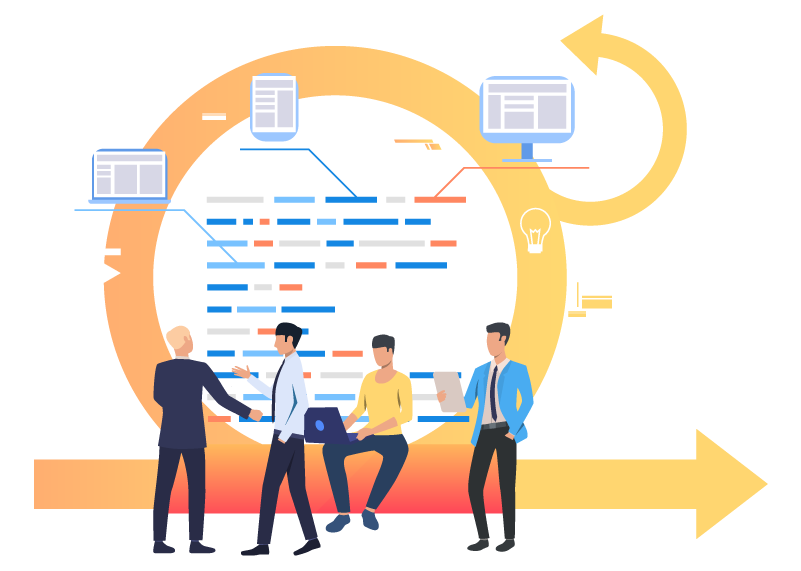
Once the design is validated, development begins using an Agile methodology. Instead of trying to build the entire application in one go, Agile breaks the work into small, manageable cycles called “sprints.” At the end of each sprint, a small piece of working software is delivered and tested.
This iterative process allows for constant feedback and lets the team adjust course as they go, preventing small issues from becoming big, expensive problems. Rigorous testing, including unit, integration, and user acceptance testing, is a core part of every single sprint. This ensures the app doesn’t just work, but that it’s also secure and performs perfectly under real-world pressure. Our portfolio of client cases shows how this approach consistently delivers high-quality results.
This visual shows how an AI model can take raw data, like medical images, and analyze it to generate actionable clinical insights.

The real magic of this process is its ability to turn incredibly complex inputs into simple, clear outputs that help clinicians make better, faster decisions.
Seamless Deployment and Ongoing Maintenance
Going live is just the beginning of the journey, not the end. A smooth deployment requires careful planning, from setting up secure cloud infrastructure to properly training the people who will use the app every day. Once it’s launched, the application moves into the maintenance phase: an ongoing cycle of monitoring performance, applying security updates, and making improvements based on user feedback and new regulations.
A custom healthcare application is a living product. A dedicated maintenance and support plan ensures it remains secure, performant, and valuable to your organization for years to come.
This commitment to continuous improvement is what protects your investment and guarantees the long-term success of the application.
Finding the Right Partner and Measuring What Matters
Picking a development partner is probably the single most important decision you’ll make when building a custom healthcare application. It’s not about finding the cheapest quote or the slickest sales pitch. It’s about finding a team that genuinely gets the complexities of health tech – a strategic guide, not just a room full of coders.
You need to look past the talk and see real proof. A great partner will have a solid portfolio of compliant healthcare software they’ve already launched and can point to. They should also offer flexible ways of working that can change as your project does. This is the bedrock of any successful partnership.
What to Look For in a Development Partner
When you’re talking to potential partners, don’t compromise on these essentials:
-
Real-World Healthcare Experience: They need to know the difference between a clinical workflow and a standard business process. Ask to see specific client cases that prove they’ve built and delivered successful solutions in the healthcare space before.
-
Deep Security and Compliance Knowledge: Building HIPAA- and GDPR-compliant apps should be second nature to them. Security can’t be a feature they tack on at the end; it has to be part of their DNA from the very first line of code.
-
A Strategic Mindset: A good partner doesn’t just blindly follow orders. They should push back, challenge your ideas, and offer better solutions based on their experience. Think of them as an extension of your own team, not just a vendor.
Choosing the right AI solutions partner is especially critical. They bring more than just coding skills; they bring the vision needed to build something that will last.
Calculating the True ROI
How do you justify the cost of building a custom app? The answer isn’t just about new revenue. The real return on investment (ROI) often comes from making your operations smoother, cutting down on risks, and ultimately, improving patient outcomes. You’re not building a cost center; you’re making a strategic investment.
A solid ROI business case might look at factors like:
-
Cutting Down on Admin Work: Think about the hours saved by automating appointment scheduling, billing, or the endless slog of clinical documentation. Put a number on it.
-
Reducing Patient Readmissions: If your app helps patients manage their chronic conditions better, even a small drop in hospital readmissions translates to huge cost savings.
-
Boosting Clinician Productivity: When workflows are simpler, doctors and nurses can see more patients or dedicate more focused time to those who need it most.
Just look at the market for custom healthcare customer data platforms (CDPs). It’s expected to rocket from USD 1.16 billion in 2025 to a massive USD 14.24 billion by 2034. Why? These platforms provide the predictive analytics needed for value-based care models to work. You can discover more insights about the CDP market to see where things are headed. This explosive growth shows just how much value custom tools can deliver when they improve data-driven decisions.
At the end of the day, successful healthcare software development delivers a powerful return by solving very specific, very expensive problems with a focused, custom-built solution.
Frequently Asked Questions
1. How long does it take to build a custom healthcare app?
The timeline varies significantly based on complexity. A Minimum Viable Product (MVP) with core features might take 4-6 months. A more comprehensive system with AI integrations and extensive third-party connections could take a year or more. A phased approach, delivering core functionality first, is often the most effective strategy.
2. What are the biggest risks in custom health app development?
The primary risks involve data security and HIPAA/GDPR compliance, seamless integration with legacy systems like EHRs, and ensuring high user adoption among clinicians and patients. Mitigating these risks requires a development partner with proven expertise in the healthcare industry.
3. How much does a custom healthcare application cost?
The investment can range widely. A simple MVP might start around $50,000, while a full-featured platform with sophisticated AI could exceed $500,000. Key cost drivers include feature complexity, the number of platforms (iOS, Android, web), and the extent of required integrations.
4. Can I update the application after it’s launched?
Absolutely. A well-architected custom application is designed for evolution. Using an agile development methodology allows for continuous updates, security patches, and new feature rollouts based on user feedback and changing market needs, ensuring the app remains valuable long-term.
Ready to build a healthcare solution that delivers real-world results? Bridge Global specializes in creating secure, compliant, and user-centric custom healthcare applications that empower providers and improve patient outcomes.
Schedule your free consultation to discuss your project today!