

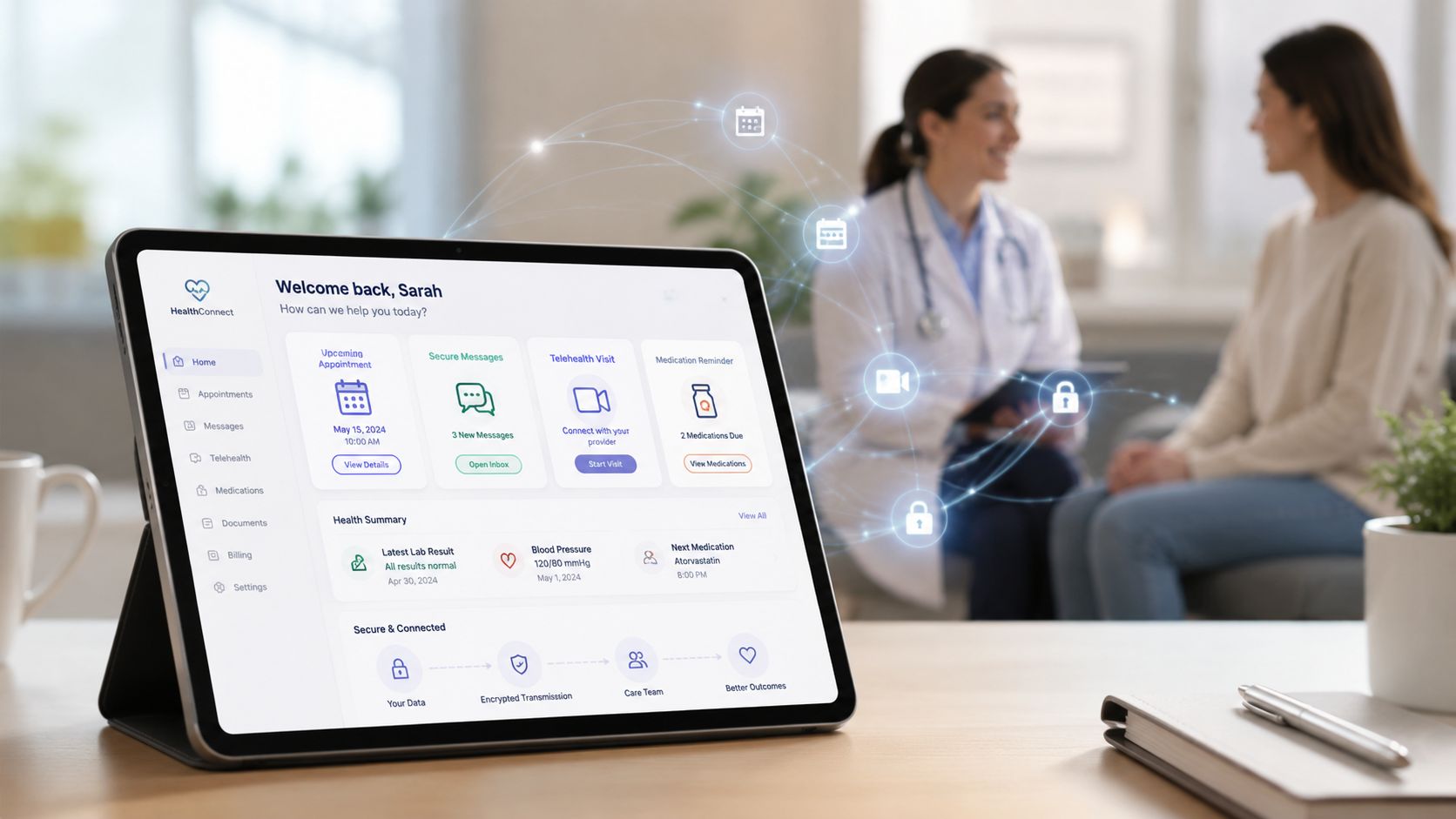

Patient Engagement Platforms: Build, Scale, and Succeed
The popular advice is simple: choose the patient engagement platform with the longest feature list. That advice is wrong often enough to be dangerous. Scheduling, reminders, messaging, intake, portals, and AI don't create engagement by themselves. Patients return when a platform removes friction from a real care task, delivers useful information at the right time, and keeps their data and conversations synchronized across the clinical systems they already depend on.
The category has matured quickly, but adoption still exposes a design problem. A platform can be secure, polished, and packed with features, yet fail because patients must create another account, staff must manage another inbox, or a scheduling update takes too long to reach the EHR. The practical question isn't which product has the most capabilities. It's whether the architecture and workflows make the next patient action obvious, accessible, and worth repeating.
Why Most Patient Engagement Platforms Fail at Retention
More features don't automatically produce better engagement. Independent commentary reports that health app abandonment can reach 80% within 30 days, while only about one-third of patients offered a portal ever log in, as discussed in Why Most Patient Engagement Software Falls Short. Those figures point to a retention problem, not a feature shortage.
Patients abandon platforms when the product asks them to work around the healthcare system. A reminder may arrive in one channel, the appointment may live in another system, and the care team may not see the patient's response in the chart. An app download, a separate password, unclear language, or a message that doesn't resolve the patient's immediate need adds another barrier. Each barrier is small, but the combined experience feels disconnected.
Feature breadth is not a behavioral strategy
A successful platform gives patients a reason to return. That reason might be a pre-visit form that saves time, a direct answer from the care team, a timely preparation instruction, or a simple way to reschedule. The workflow should connect the message to an action and the action to a visible outcome.
A broadcast campaign may generate attention, but it won't create a durable habit if patients can't complete the next step. Similarly, an AI assistant that answers routine questions can reduce pressure on staff, but it needs clear escalation rules when a request involves symptoms, medication, deterioration, or another clinical concern.
Practical rule: Design every patient message around one clear next action, then verify that the action writes back to the right clinical system.
Retention also depends on the staff experience. If two-way messaging creates an unmanaged queue, providers will stop trusting the platform. If automated reminders trigger from stale appointment data, patients will receive confusing instructions. The platform must make the correct workflow easier for staff, not merely add another communication channel.
Interoperability is part of the patient experience
Fragmented systems force patients to repeat information and move between interfaces. That's why integration depth matters more than an impressive feature checklist. Market roundups show substantial variation, from EHR-native deployments to products advertising broad integration catalogs, indicating that connectivity remains a major differentiator rather than a solved problem, as outlined in a practical overview of patient engagement tools.
Teams evaluating retention should borrow a useful idea from other subscription businesses and adapt churn reduction strategies for ecommerce to healthcare's stricter privacy and clinical context. The transferable lesson is to identify where users disengage, remove unnecessary steps, and build timely interventions around meaningful behavior. In healthcare, that means measuring completed care actions, not just logins.
The Evolution from Patient Portals to Engagement Platforms
Patient engagement platforms grew out of a broader change in healthcare, from passive treatment toward informed participation. The U.S. FDA created its Patient Representative Program in 1991, formalizing patient involvement in decision-making. Reforms during the 2010s then accelerated access to digital records and self-service tools, creating the conditions for today's patient-facing software, according to the patient engagement history and adoption analysis.
Early portals solved an important access problem. Patients could view records, receive results, and sometimes request appointments without calling a practice. But access alone didn't guarantee participation. By 2020, roughly 90% of U.S. healthcare systems offered patient portals, while only 15% to 30% of patients used them, according to a review of patient portal adoption. Broader improvement programs recorded patient use ranging from 8% to 77%, depending on the setting and intervention, which shows how strongly workflow design and implementation influence behavior.
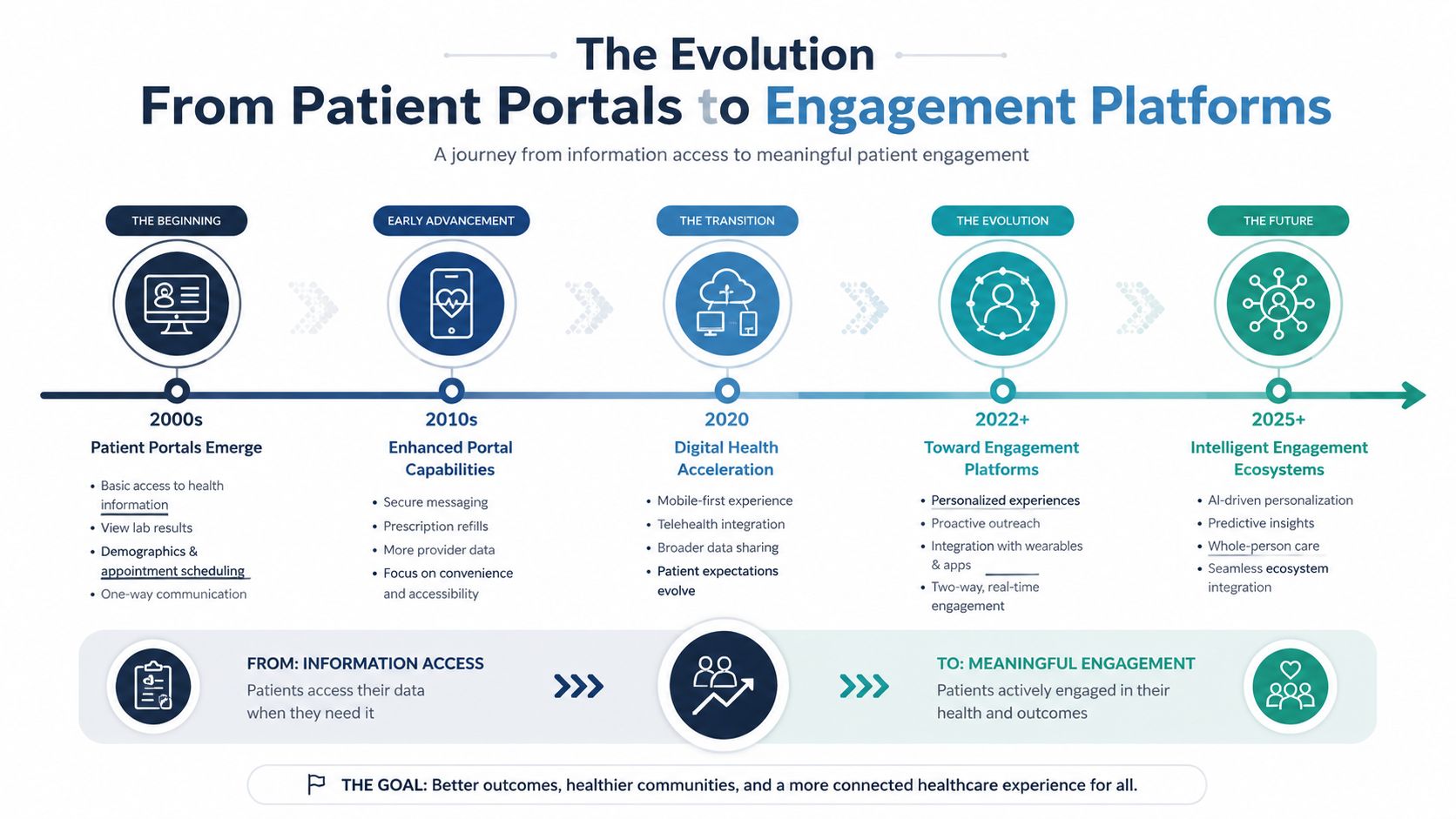
From information access to guided participation
Modern platforms emerged to close that usability gap. They combine portal access with scheduling, reminders, digital intake, education, two-way communication, and workflow automation. The distinction matters. A portal is primarily a destination for information. An engagement platform can actively guide a patient through preparation, follow-up, care coordination, and administrative tasks.
That shift also changes product strategy. The platform must understand an event in the care journey, determine what the patient needs next, and communicate through an accessible channel. It should support a secure portal where appropriate, but it shouldn't assume that every patient wants to download an app or use a complex dashboard.
Current market estimates reflect this transition. Independent reports place the global patient engagement platform market at approximately USD 27.63 billion in 2024 and USD 33.95 billion in 2025, with projections ranging from USD 86.67 billion by 2030 to USD 194.18 billion by 2034. The same market source gives estimated growth of roughly 20.97% to 21.38% CAGR, depending on the forecast horizon, with cloud-based delivery at 42.3% share and North America at 45.2% of revenue. These figures are projections and estimates, not guaranteed outcomes, but they show that patient engagement has become an established software category, as detailed in the patient engagement platform market analysis.
For a broader view of how the category is changing, readers can also consult patient engagement technology trends. The central lesson is straightforward: the market no longer rewards simple digital access alone. It rewards coordinated participation.
Core Features That Actually Drive Patient Engagement
A platform's feature list should be evaluated against patient behavior and operational outcomes. Scheduling, reminders, digital intake, two-way messaging, phone support, education, and telehealth connectivity are common components, but their value depends on how well they work together and how reliably they synchronize with the EHR across locations.
Scheduling is usually the first workflow to examine. Patients should be able to find an appropriate appointment, confirm it, cancel it, or request a change without forcing staff to reconcile multiple calendars manually. Automated reminders matter because they turn an upcoming appointment into a sequence of useful prompts, not a single generic notification.
Digital intake has a different role. It reduces repetitive data entry before a visit and gives the organization an opportunity to collect information while the patient has time to review it. The workflow should support incomplete forms, accessibility needs, and staff review. A form that is technically digital but difficult to complete on a phone won't improve the experience.
Table stakes versus differentiators
Two-way messaging becomes valuable when it has routing, ownership, escalation, and chart synchronization. Without those controls, it can increase workload rather than reduce it. Educational content also needs context. A preoperative instruction, medication explanation, or follow-up message has more value when it arrives in relation to a scheduled care event.
| Feature | Engagement Impact | Operational Benefit | Implementation Complexity |
|---|---|---|---|
| Scheduling and rescheduling | Gives patients a direct reason to return | Reduces manual appointment handling | Medium |
| Automated reminders | Reinforces the next care action | Helps limit missed appointments | Low to medium |
| Digital intake | Removes repetitive steps before visits | Improves information collection | Medium |
| Two-way messaging | Builds an ongoing communication path | Deflects routine calls when routed correctly | Medium to high |
| Telehealth integration | Keeps remote visits inside the care journey | Reduces channel switching for patients and staff | High |
| Targeted education | Supports preparation and follow-through | Standardizes approved guidance | Medium |
A useful selection framework is to score each capability against four questions:
-
Patient value: Does it solve a task patients already struggle to complete?
-
Workflow ownership: Does a named team know who handles the resulting action?
-
Data synchronization: Does the outcome update the EHR and related systems reliably?
-
Retention potential: Will the patient need or want to use it again during the care journey?
The strongest platforms create a compound effect. A reminder opens a scheduling action, scheduling triggers intake, intake informs the care team, and follow-up education prepares the patient for the next step. The individual features are familiar. The integrated workflow is what drives repeat use.
Building Interoperable Architecture with FHIR and EHR Integration
The interface is the visible part of a patient engagement platform. The integration layer determines whether the product behaves like a dependable care system or an isolated messaging tool. FHIR provides a standards-based API model for connecting patient-facing applications with EHR data, and research describes it as a promising mechanism for overcoming longstanding barriers to EHR-app integration, as shown in this FHIR integration study.
A practical architecture starts with clear boundaries. The engagement application should request only the data needed for a defined workflow, such as appointment details, patient demographics, care-plan content, or selected clinical resources. Patients should be able to access their health data and selectively grant third-party applications access through FHIR APIs, rather than receiving broad, indefinite exposure to an entire record.
APIs handle access; events handle change
A common implementation mistake is treating a one-time API connection as synchronization. It isn’t. A patient engagement app needs to know when an appointment changes, a result becomes available, a care plan is updated, or a patient’s enrollment status changes.
Event subscriptions from the EHR to the application allow the platform to react to those changes near real time. The integration research behind an HL7 FHIR-based patient engagement app platform identifies this event-driven pattern as necessary for practical deployment, because patient apps need to respond when source data changes, as described in the JAMIA Open FHIR architecture research.
A scalable workflow typically includes:
-
Identity matching: Resolve the patient across systems without creating duplicate profiles.
-
Consent and authorization: Record what the patient has permitted and for which application or workflow.
-
FHIR resource access: Retrieve the minimum required data through standardized APIs.
-
Event subscription: Listen for relevant changes from the EHR.
-
Workflow orchestration: Trigger the appropriate message, task, or escalation.
-
Write-back and reconciliation: Store the outcome in the correct clinical or operational record.
-
Failure handling: Queue retries, alert support teams, and prevent duplicate patient messages.
Multi-tenant SaaS adds another layer of discipline. Tenant configuration, role permissions, consent records, integration credentials, message templates, and audit events must remain isolated. Each care site may have different EHR capabilities, terminology, scheduling rules, and escalation policies, so the platform should use configuration and adapters rather than hard-coded assumptions.
The build-versus-buy decision should focus on integration behavior, not the number of listed connectors. A vendor may advertise broad connectivity, yet still leave teams with manual reconciliation, delayed updates, or incomplete chart context. Before selecting a platform, test a complete workflow from EHR event to patient action to clinical write-back. The FHIR integration services guide offers related context for teams evaluating this architecture.
Compliance and Security Requirements for Healthtech Platforms
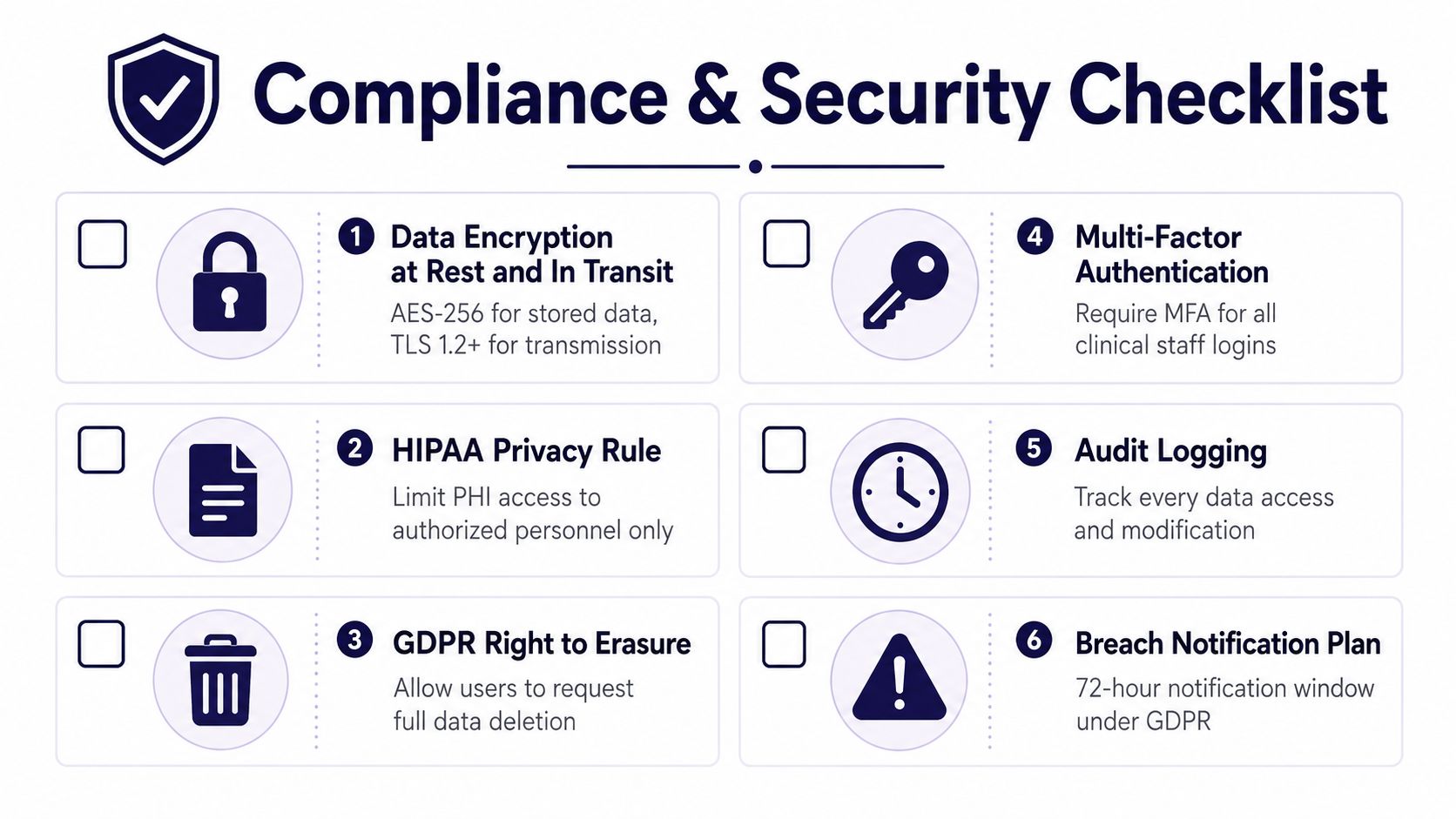
Compliance is an architecture decision, not a post-launch checklist. HIPAA and GDPR influence how a patient engagement platform stores data, authenticates users, manages consent, logs access, handles deletion requests, and responds to incidents.
A compliant design starts with data classification. Teams should identify protected health information, separate it from operational metadata where practical, and define which services can access each type. Encryption at rest and in transit protects data, but encryption doesn’t replace authorization. Role-based access control should limit staff access according to job responsibilities, tenant boundaries, and care context.
Design controls into the delivery lifecycle
Consent management needs more detail than a single checkbox. The platform should record the consent version, purpose, channel, timestamp, and withdrawal state. It should also distinguish between permission to communicate and permission to share clinical data with a third-party application.
Audit logging deserves equal attention. Record access, modification, exports, administrative changes, authentication events, and integration activity in a tamper-resistant system. Give security and compliance teams useful search and reporting tools, because an audit trail that nobody can interpret won’t support a timely investigation.
A practical control set includes:
-
Least-privilege access: Give users only the permissions required for their role.
-
Strong authentication: Protect clinical and administrative accounts with appropriate authentication controls.
-
Secure integrations: Validate tokens, scopes, certificates, payloads, and error responses at every system boundary.
-
Data lifecycle controls: Define retention, archival, deletion, and legal-hold behavior before production launch.
-
Incident readiness: Maintain detection, containment, investigation, and notification procedures.
-
Continuous verification: Test security controls through code review, automated checks, dependency management, and release gates.
The platform must also balance accessibility with protection. Patients need a simple path to view information and complete care tasks, while the organization must prevent unauthorized disclosure through shared devices, misdirected messages, weak identity matching, or overly broad staff access.
A capable healthtech software development partner can help map these requirements to system boundaries, release controls, and operational procedures. Teams considering custom healthcare software development should require compliance evidence in the development process, not just a policy document after launch. The HIPAA-compliant software development guide provides further guidance on embedding those controls into delivery.
Measuring ROI and Key Performance Indicators
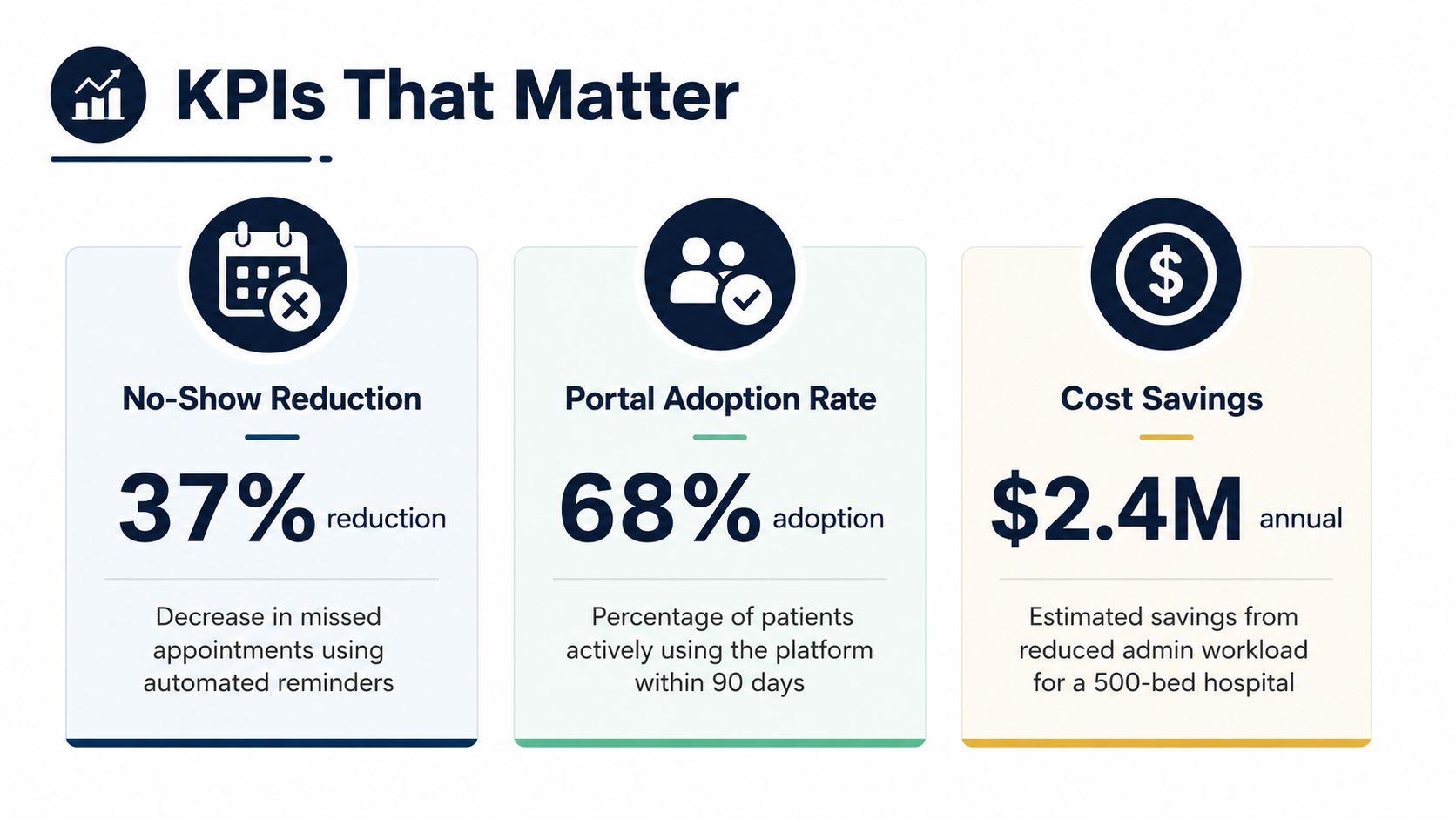
A patient engagement platform earns its place in the stack when the organization can connect usage to care and operational outcomes. Logins are useful for diagnosing adoption, but they’re weak as a standalone success measure. A patient who logs in repeatedly but can’t complete an appointment or reach the correct team isn’t experiencing successful engagement.
No-show performance offers a more concrete example. A primary-care study found portal users had significantly lower quarterly no-show rates than non-users, with relative risks between 0.60 and 0.83 across 8 of 11 quarters after adoption, according to the portal use and appointment attendance study. A separate multivariable analysis reported that portal access was associated with a 57% reduction in the odds of missing an appointment, with an odds ratio of 0.43 and a 95% confidence interval of 0.30 to 0.59, from the same source.
Connect behavior to operational value
Consider a rollout focused on appointment confirmation. The team should establish a baseline for missed appointments, then track whether patients receive the message, open it, confirm or reschedule, and whether the final appointment status reaches the EHR. That sequence distinguishes delivery from action and action from operational impact.
The same logic applies to care coordination. Track whether referrals move between stages, whether patients complete required intake, whether unresolved messages age in a queue, and whether staff can see the full conversation without switching systems. For value-based care, connect those actions to approved clinical and reimbursement measures rather than treating engagement as an isolated communications metric.
A useful KPI hierarchy looks like this:
-
Access metrics: Enrollment, authentication success, message delivery, and portal availability.
-
Behavior metrics: Completed forms, confirmed appointments, responses, rescheduling, and educational content completion.
-
Workflow metrics: Queue age, staff handling time, escalation volume, and chart write-back success.
-
Outcome metrics: Missed appointments, care-plan adherence, patient-reported experience, and coordination completion.
-
Financial metrics: Avoided administrative work, recovered appointment capacity, and financial outcomes relevant to the care model.
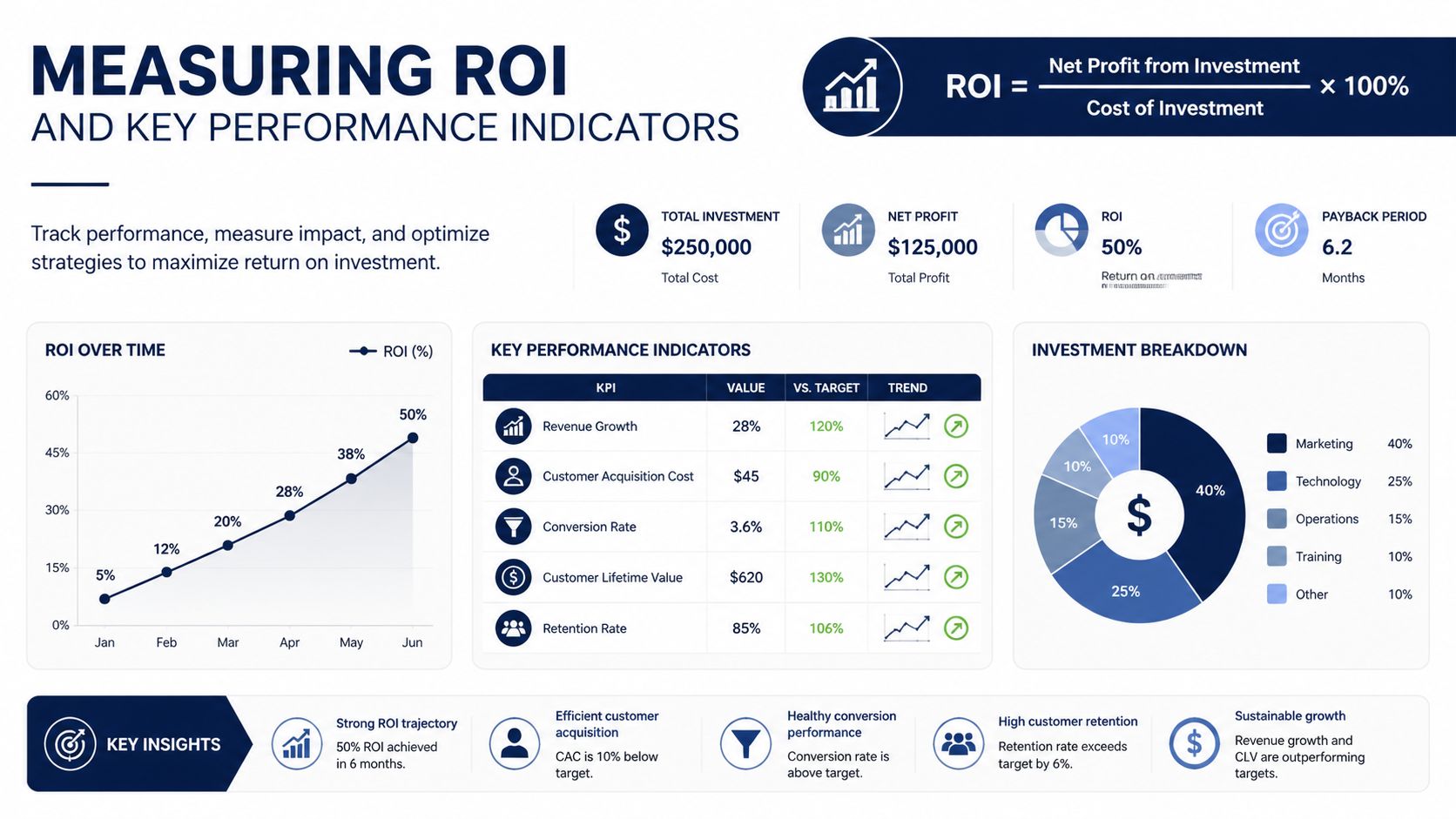
The measurement plan should also include patients who don’t use digital channels. Compare outcomes by communication preference, language, accessibility need, and care setting where the organization can do so appropriately. A platform that improves digital metrics while excluding patients who need alternative support has created a reporting win, not an engagement win.
Implementation Best Practices and Common Pitfalls
Implementation starts before configuration. The team needs to understand how appointments are created, changed, and canceled; who owns inbound messages; how clinical escalation works; which systems hold authoritative data; and what patients currently do when digital support fails.
A phased rollout reduces risk because it lets the organization validate one complete workflow before expanding the surface area. Start with a high-value use case, such as reminders with confirmation and rescheduling, then test the entire path through the EHR. Add intake, messaging, education, and care coordination only after the first workflow has reliable ownership and measurement.
A practical delivery sequence
-
Map the current journey: Document patient actions, staff handoffs, system boundaries, and failure points.
-
Define the minimum viable workflow: Choose one outcome and remove features that don’t support it.
-
Confirm integration ownership: Identify the source of truth for appointments, identity, consent, and clinical updates.
-
Pilot with representative users: Include staff and patients with different communication preferences and accessibility needs.
-
Train around exceptions: Teach teams what happens when identity matching fails, a patient replies with a clinical concern, or an integration is unavailable.
-
Measure and refine: Review completion, escalation, abandonment, and operational workload before adding new journeys.
The most common failure is underestimating integration complexity. A connector that imports appointment data may not support cancellations, provider changes, multi-site scheduling, or reliable write-back. Provider buy-in is another requirement. If clinicians don’t trust the routing and escalation model, they’ll discourage patients from using the channel.
Patient onboarding also needs human judgment. Keep instructions plain, offer alternatives for people who can’t use the preferred digital channel, and make the first interaction useful. Launch day isn’t the finish line. Teams need an operating rhythm for reviewing failed messages, unresolved tasks, outdated content, and patient feedback.
AI can help when the workflow is well defined. Teams may use AI development services for classification, routing, summarization, or carefully governed predictive engagement features. An AI implementation roadmap can help sequence those capabilities, while enterprise AI solutions are relevant when governance, scale, and cross-system orchestration become central requirements.
Choose delivery support based on the product’s actual constraints. Different software development service models suit different levels of internal capacity, integration complexity, and long-term ownership. Whether the team builds through custom software development or chooses SaaS product development, the acceptance criteria should include data synchronization, exception handling, staff workload, accessibility, and retention behavior. A review of relevant client cases can help buyers assess how an engineering partner approaches complex delivery, but the final decision should rest on demonstrated fit with the organization’s systems and workflows.
Frequently Asked Questions
What should buyers prioritize first?
Prioritize the patient journey with the clearest operational pain. For many organizations, that means appointment reminders and rescheduling, digital intake, or two-way communication with defined staff ownership. A smaller workflow that works end to end is more valuable than a broad deployment that leaves patients and staff navigating disconnected systems.
Are patient portals still important?
Yes. Portals remain useful for authenticated access to records, results, forms, and messages. The limitation is that a portal alone doesn’t guarantee sustained use. Patient engagement platforms extend portal access with timely prompts, workflow automation, scheduling, education, and communication that support active participation.
Why does FHIR matter?
FHIR gives patient-facing applications a standards-based way to access and exchange health data with EHRs. Its value increases when the architecture also supports consent, scoped access, event subscriptions, reconciliation, and reliable write-back. An API connection without event handling can still leave the patient experience out of sync.
Should every platform include AI?
No. AI is useful when it solves a defined problem, such as routing routine requests, summarizing conversations, or personalizing approved educational content. It should have clear escalation paths and human oversight, especially when a patient’s message may indicate an urgent clinical issue. Adding a chatbot to a broken workflow won’t fix retention.
How can teams measure success?
Measure the chain from access to action to outcome. Track enrollment and delivery, then completed forms, confirmations, rescheduling, message resolution, queue performance, and relevant clinical or operational outcomes. Review digital and non-digital pathways together so adoption improvements don’t conceal exclusion.
What causes patient abandonment?
Common causes include excessive onboarding steps, unclear value, poor mobile usability, fragmented communication, stale data, inaccessible language, and messages that don’t lead to a useful action. Staff overload also matters. If patients receive slow or inconsistent responses, they learn that the platform isn’t a reliable care channel.
Is custom development better than buying a platform?
Neither approach is automatically better. Buying can accelerate access to established workflows, while custom development can address distinctive clinical operations, multi-tenant product requirements, or integration constraints. Compare total ownership, data control, interoperability depth, workflow flexibility, compliance responsibilities, and the ability to improve retention over time.
How should a rollout handle patients who can’t use digital tools?
Keep alternative communication routes available and make them part of the operating model. Staff should know how to support patients with limited connectivity, different accessibility needs, or a preference for phone or in-person communication. Inclusion is a product requirement, not an exception process.
What does a good implementation partner contribute?
A strong partner helps translate clinical workflows into product requirements, designs integration and security boundaries, validates FHIR and EHR behavior, and supports phased delivery. The partner should also help define measurement, train operational teams, and plan for maintenance after go-live. The platform needs ongoing ownership because patient behavior and clinical workflows continue to change.
Bridge Global can help healthtech teams design and build secure patient engagement platforms with patient portals, messaging, telehealth workflows, EHR connectivity, and SaaS-ready architecture. If you’re evaluating a build, integration strategy, or retention-focused roadmap, visit Bridge Global to discuss the workflows and technical decisions that will make the product useful after launch.

About Upendra Jith
Upendrajith completed his Master's in English and has been a commercial content developer for the past three years. He's more inclined to develop content with a 'street-smart' delivery on topics such as technology, media, or anything he can get his hands on. He has a fixation on lyrics, dark poetry, media, technology, and flow arts.
View all posts by Upendra Jith →