



AI in Healthcare Access: Key Findings from OpenAI’s Latest Report
OpenAI has recently published a detailed research report titled “AI as a Healthcare Ally: How Americans Are Navigating the System with ChatGPT.” Based on anonymized usage data and real-world examples, the report documents how AI in healthcare is already being used by millions of people to navigate healthcare systems, bridge access gaps, and support clinical and life sciences work, offering evidence of real-world impact rather than future speculation.
At Bridge Global, we see this as a key signal for healthtech leaders and healthcare organizations across the US and Europe. It highlights where systems are under strain and where well-designed AI can deliver measurable value. In this article, we examine OpenAI’s findings, link them to broader digital health trends, and share our perspective on building responsible, scalable AI-driven healthcare solutions.
Background
Healthcare systems worldwide are under immense strain, facing critical gaps in both access and workforce. The World Health Organization projects a global shortfall of 11 million health workers by 2030, and an estimated 4.5 billion people currently lack access to essential healthcare services. Even in developed regions, many view healthcare as falling short. In the United States, for example, public polls rate the system poorly on access and cost, with 70% of Americans calling it in “major problem” or a crisis. This crisis in care availability, quality, and equity demands innovative solutions. Increasingly, artificial intelligence (AI) is stepping up as a crucial ally to help bridge these healthcare gaps. Notably, AI chatbots like ChatGPT are already playing a role in empowering patients and supporting providers, heralding a new era of digital health transformation.
ChatGPT: Bridging Access and Understanding for Patients

AI tools are rapidly becoming a frontline resource for patients seeking information and guidance. In fact, more than 40 million people worldwide turn to ChatGPT daily with health-related questions – from clarifying symptoms to navigating insurance paperwork. This growing use of AI in healthcare access reflects a clear demand for support beyond traditional clinical settings. Nearly 70 percent of these interactions occur outside standard clinic hours, highlighting how patients rely on AI tools when healthcare services are unavailable or difficult to reach.
The data also shows how ChatGPT in healthcare is helping address geographic access gaps. In the United States, over 580,000 healthcare-related queries per week originate from so-called hospital deserts, defined as areas more than 30 minutes from the nearest medical facility. States such as Wyoming and Montana show particularly high usage from remote regions, indicating that AI tools for healthcare access are becoming an important source of information where in-person care is limited or delayed. While AI does not replace clinicians or physical infrastructure, it supports patients by helping them interpret symptoms, prepare for medical visits, and navigate care pathways more effectively.
Beyond access, AI in patient care is also addressing a long-standing challenge in healthcare: understanding. Medical information is often complex, filled with clinical terminology that can be difficult for patients to interpret. Large language models like ChatGPT have demonstrated the ability to translate professional medical language into clear, patient-friendly explanations. In studies examining radiology reports, AI-generated summaries significantly improved readability and patient comprehension, helping individuals better understand their results and next steps.
These findings highlight the role of AI in healthcare communication and engagement. Simplified explanations and contextual guidance improve health literacy, enabling patients to participate more actively in their care. As OpenAI’s report shows, ChatGPT is already being used to answer common health questions, provide basic self-care guidance, and support early decision-making. In this way, AI in healthcare is emerging as a practical tool that enhances patient confidence, supports informed choices, and extends healthcare understanding beyond clinical walls.
Empowering Healthcare Providers with AI Support
AI’s benefits extend beyond patients. AI in healthcare is also helping doctors, nurses, and healthcare teams work smarter and more effectively. One of the biggest challenges for providers today is workload: clinicians are burdened by administrative tasks, documentation, and data overload, which can detract from time spent with patients.
Here, AI tools for healthcare providers are increasingly acting as force-multipliers for healthcare professionals. For example, AI-powered “scribes” that automatically transcribe and summarize patient visits are dramatically reducing the documentation burden. At the Cleveland Clinic, deploying an ambient AI scribe system cut doctors’ after-hours charting (“pajama time”) nearly in half, while face-to-face patient time increased by 33%. By easing documentation pressure, AI in clinical workflows allows providers to focus more on listening to patients and delivering care.
Research also shows that ChatGPT in healthcare can reduce administrative workload across a range of routine tasks. From drafting clinical notes and managing scheduling to responding to non-urgent patient queries, AI is streamlining operations and returning valuable time to clinicians. This support enables healthcare professionals to prioritize clinical decision-making and patient engagement rather than paperwork.
Several hospitals are now piloting AI copilots for clinicians that summarize patient interactions, surface relevant information, and flag key considerations, while keeping final decisions firmly with healthcare professionals. Used in areas such as triage, medication interaction checks, and routine clinical reviews, these systems function as a second pair of eyes. By supporting documentation, research, and information retrieval, AI supporting healthcare professionals is helping reduce burnout and improve efficiency, allowing clinicians to focus on what matters most: patient care.
AI and the Future of Digital Health Transformation

The promising impacts of ChatGPT in healthcare are just the beginning. Across the industry, AI-driven innovations are catalyzing a broader digital health transformation. From diagnostic algorithms to virtual health assistants, these tools are helping bridge longstanding gaps in healthcare delivery.
For example, AI systems can analyze medical images or lab results with remarkable accuracy – in some cases spotting nuances that humans miss. Studies have shown AI models outperforming clinicians in certain tasks, such as detecting early signs of strokes on brain scans or identifying subtle fractures on X-rays. By catching issues that might otherwise be missed, these technologies prevent patients from falling through the cracks. Predictive models also enable earlier intervention by identifying risks before symptoms escalate. Together, they point to a future where AI supports prevention, diagnosis, treatment, and follow-up to improve outcomes and reach.
Importantly, AI is poised to make the biggest difference in communities that have historically been underserved. In low- and middle-income countries, where doctor-to-patient ratios are low and rural populations struggle to get care, AI offers a way to scale expertise beyond the limits of human infrastructure.
In Kenya, Jacaranda Health integrated an AI-powered chatbot into its maternal care program through PROMPTS, a two-way SMS service in local languages. Using a custom AI model in Swahili and English, response times dropped from hours or days to minutes, reaching over 500,000 mothers in 2024. The system works alongside clinicians by flagging high-risk cases for rapid human follow-up. This hybrid model has significantly improved maternal care, showing how AI can expand healthcare access and equity by strengthening, not replacing, human expertise.
Here’s a versatile AI assistant that can expertly act as a chatbot for your healthcare system.
As we look ahead, it’s clear that AI will play an increasingly central role in healthcare delivery and strategy. Healthcare AI solutions are rapidly evolving, and investment in digital health is growing worldwide. Hospitals and startups are adopting AI across telemedicine, personalized care, drug discovery, and patient monitoring, with the potential to improve quality and efficiency.
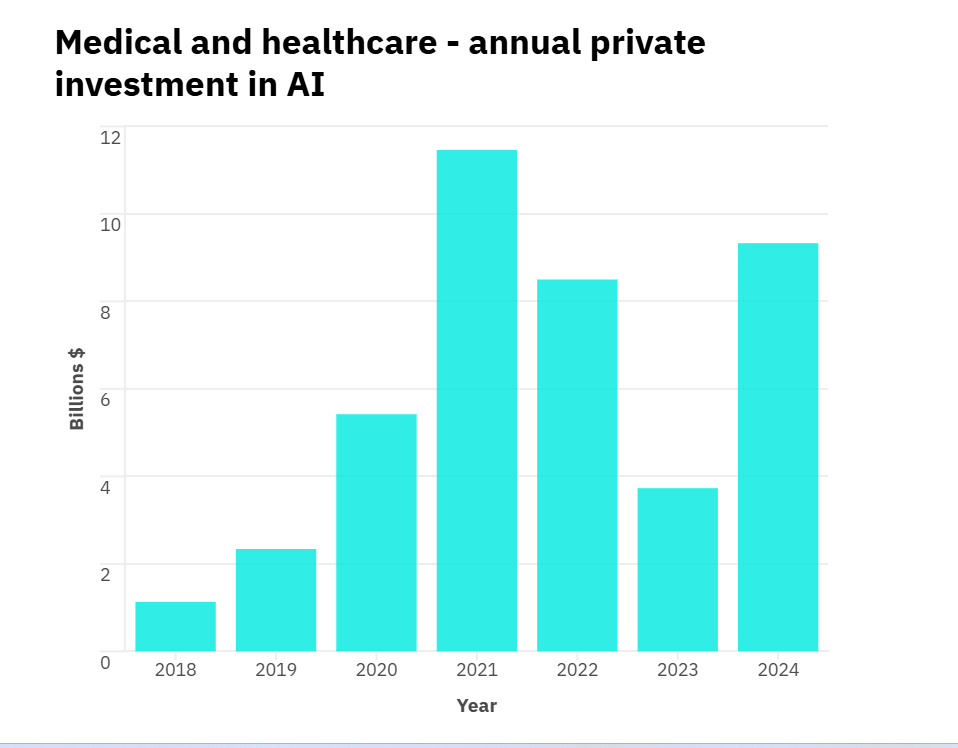
Source: https://www.weforum.org/stories/2025/08/ai-transforming-global-health/
In a high-stakes setting like healthcare, success depends on managing accuracy, bias, privacy, and trust. AI delivers the most value when integrated into clinical workflows, supported by training, and paired with transparency and human empathy. It is an enabler, not a replacement, and works best alongside human judgment and care.
Wrapping Up
From helping a patient in a remote village get instant medical advice to freeing a doctor from hours of paperwork, AI tools like ChatGPT are truly emerging as allies in bridging healthcare gaps. This alliance between AI and healthcare is a cornerstone of the ongoing digital health transformation across the globe. By leveraging AI responsibly and collaboratively, we can move closer to a future where quality healthcare is more accessible, equitable, and efficient for all.
For health tech leaders and care providers, the imperative now is to embrace these AI innovations thoughtfully – aligning them with patient needs and clinical best practices – so that technology and humanity together can deliver better health outcomes.
Bridge Global believes that AI-driven solutions, when developed and deployed with care, will continue to bridge critical gaps in healthcare and unlock new possibilities in patient care. The journey has just begun, but the early signs are clear: with AI as a capable partner, we have a powerful means to help close the divide in healthcare access and quality around the world.
If your organization is exploring how AI can be applied responsibly within healthcare systems, our team is available to discuss use cases, technical feasibility, and implementation considerations. Connect with us to discuss more.

About Preethi Saro Philip
Preethi Saro Philip is a Post Graduate Research Degree holder in Economics with more than 10 years of experience in writing, editing, research and teaching. She has an intense passion for content crafting and calls herself a ‘wordsmith’. She enjoys writing on wide-ranging topics including business, technology, health & lifestyle, education, environment etc.
View all posts by Preethi Saro Philip →