


CRM Software Development Services for Tailored Business Growth
When you hear about CRM software development services, don’t just think of programmers building another piece of software. Think of it as constructing a command center specifically for your company’s customer interactions.
Unlike off-the-shelf CRM products that force you to work within their limitations, custom development builds a system around your specific sales funnels, marketing strategies, and customer support playbook. It’s about turning a generic tool into a powerful, strategic asset.
What Are CRM Software Development Services
Imagine a generic CRM is like a rental tuxedo—it gets the job done, but it never quite fits perfectly. CRM software development services are the equivalent of hiring a master tailor. The final product is built to your exact measurements, fitting every contour of your business operations.
This custom-built system becomes the central nervous system for all your customer-facing activities. It’s engineered to match your unique operational DNA, from the moment you first engage a lead to the way you handle long-term customer loyalty.
Check out top 5 CRM trends here.

Going Beyond the Basics
To really get why this matters, you have to understand the core idea of Customer Relationship Management in marketing. At its heart, it’s a strategy for managing every single interaction your company has with current and potential customers. A custom CRM platform is the engine that drives this strategy, helping you stay connected, simplify processes, and ultimately, boost your bottom line.
The demand for these tailored systems is exploding. The global CRM software market hit a value of around USD 254.89 billion in 2024 and is expected to jump to USD 298.61 billion in 2025. That’s a 17.2% increase in just one year, which shows just how many businesses are recognizing the need for a system that truly works for them.
The real goal of a custom CRM is to make your data work for you. It’s not just about storing names and numbers; it’s about building a system that actively helps your teams make smarter, faster decisions based on real-time insights.
Off-The-Shelf CRM vs Custom CRM Development
Deciding between a pre-built solution and a custom one is a major crossroads. One offers speed and simplicity, while the other provides power and precision. This table breaks down the key differences to help you see which path makes sense for your business.
| Feature | Off-The-Shelf CRM | Custom CRM Development |
|---|---|---|
| Workflows | Pre-defined; you adapt your process to the software. | Built around your specific, existing business processes. |
| Integration | Limited to standard APIs and common third-party apps. | Deep, seamless integration with any of your other systems. |
| Features | Generic features used by everyone; may have bloat. | Only the features you need, designed for your goals. |
| Scalability | Limited by the vendor’s tiered plans and architecture. | Designed to grow and evolve with your company’s needs. |
| Cost Structure | Subscription-based (monthly/annual per user fee). | One-time development cost plus ongoing maintenance. |
| Competitive Advantage | None; you’re using the same tools as competitors. | High; you can build proprietary tools and workflows. |
Ultimately, while an off-the-shelf CRM can get you started quickly, a custom-developed platform is an investment in long-term efficiency and a distinct competitive edge.
Key Differentiators of Custom CRM Development
Choosing to build your own CRM isn’t just about adding a few bells and whistles. It’s about fundamentally re-engineering your workflows for maximum performance and gaining advantages that a pre-packaged solution simply can’t offer.
Here’s what really sets custom CRM development apart:
- Purpose-Built Workflows: You don’t have to change the way you work to fit the software. The software is built from the ground up to support and enhance your proven processes.
- Seamless Integration: A custom CRM can talk to all your other essential systems—like your ERP, accounting software, or marketing tools—without any friction, breaking down data silos for good.
- Unique Feature Sets: Want a custom lead scoring algorithm based on your specific industry? Or predictive analytics models that your competitors could only dream of? You can build them.
- Enhanced Security & Compliance: Instead of relying on a vendor’s one-size-fits-all security, your system’s protocols are designed from day one to meet your specific industry regulations and internal security standards.
Unlock Real Business Value with a Custom CRM
We’ve covered the what, but the far more important question is why. Why build a custom CRM? Think of it less as an expense and more as a direct investment into how your business runs, how it grows, and how it outsmarts the competition. You’re not just buying software; you’re building a central nervous system that operates exactly how your team works.
Imagine a sales pipeline that perfectly mirrors your unique customer journey. Picture having features that your competitors simply can’t buy off the shelf, like a proprietary lead scoring model or a one-of-a-kind integration with your custom ecommerce solutions. That’s the kind of edge we’re talking about. Here’s an insightful piece on must-have CRM features.
Boost Your Team’s Efficiency and Productivity
A custom-built CRM is designed to solve your team’s specific problems. Off-the-shelf systems are often bloated with features you’ll never use, which just creates noise and makes it harder for everyone to get on board. A custom system, on the other hand, gives each person the exact tools and dashboard they need for their job.
This tailored approach has a huge impact. Industry data shows that CRM automation can slash manual data entry tasks by up to 50%. Suddenly, your team is freed from tedious administrative work and can focus on what actually matters: building relationships and closing deals.
A custom CRM turns your operational data from a passive record into an active asset. It smooths out workflows, automates the boring stuff, and puts the right information in front of the right people at the right time. Efficiency stops being a goal and starts being a core part of your business.
Build a Foundation That’s Scalable and Secure
Your business is meant to grow, so your most important software should be ready to grow with it. Generic CRMs often box you in with rigid pricing tiers that punish you for success. A custom CRM is built for your future from day one. It can expand right alongside you as you add new team members, break into new markets, or launch new products.
You also get total control over your data security. Instead of just accepting a vendor’s one-size-fits-all security, you can build in the specific protocols and encryption your industry demands. If you handle sensitive client information, this is essential.
Here’s what that really means for you:
- Future-Proof Design: The system is built to evolve. Adding new features or integrations down the road is straightforward because the foundation was laid with your long-term vision in mind.
- Airtight Data Security: You can implement role-based access controls and custom security measures that align perfectly with your internal policies and regulations like GDPR or HIPAA.
- No Vendor Lock-In: You own the code. That gives you complete freedom to steer your own technology roadmap without being chained to a third-party subscription and their inevitable price hikes.
Putting AI to Work in Your Custom CRM
The biggest change in CRM software today isn’t just about collecting customer information—it’s about making that information work for you. When you add artificial intelligence, you’re essentially giving your CRM a brain. It stops being a passive filing cabinet and becomes a proactive engine for growth.
Instead of a system that just logs calls and emails, you can build a platform that actually anticipates customer needs, flags hidden opportunities, and even helps automate smart decisions. This is where building a custom CRM really shines.
How AI Actually Helps in the Real World
These aren’t just futuristic ideas. We build practical AI tools into CRMs that deliver real results. Our goal with AI development services is to help businesses move from constantly putting out fires to strategically preventing them in the first place.
Here’s how AI can bring a custom CRM to life:
- Predictive Lead Scoring: AI digs through your past sales data to learn what a perfect customer looks like. It then automatically scores new leads, telling your sales team exactly where to focus their energy for the best chance of success.
- Smarter Customer Groups: Machine learning can spot subtle patterns in customer behavior that a human would likely miss. This allows you to create incredibly specific marketing campaigns that speak directly to different groups, making your outreach far more effective.
- AI-Powered Sales Forecasting: By analyzing your sales pipeline, market trends, and even individual rep performance, AI models can predict future sales with surprising accuracy. This gives leadership a clear view for making smarter decisions about budgets and growth.
- Understanding Customer sentiment (NLP): Natural Language Processing, or NLP, can read through emails, support tickets, and chat logs to gauge how customers are feeling. It acts as an early warning system, helping your team resolve frustrations before they turn into bigger problems.
A custom CRM with AI is the difference between having a map and having a GPS. One shows you where you’ve been, while the other guides you intelligently to where you need to go, recalculating the best route in real-time.
The Rush for Smarter Systems
This move toward AI is fueling huge demand for CRM software development services. The market for AI specifically within CRM is on track to hit around USD 11.04 billion in 2025.
It’s happening fast. A recent survey found 51% of businesses see generative AI as the most important trend in CRM, and 65% are already using CRM tools that have it built in. If you want to dive deeper, you can discover more insights about the CRM market share on hginsights.com.
By building a custom solution, you’re creating a serious competitive edge. Check out some of the CRM client projects that has brought excellent results
Navigating the Custom CRM Development Journey
Building a custom CRM isn’t like buying a product off the shelf; it’s a deeply collaborative process, a true partnership from start to finish. To give you a better sense of what this looks like, let’s walk through the typical roadmap from an initial idea to a fully launched platform. This journey shows exactly how CRM software development services translate your business goals into a powerful, working system.
It all starts long before anyone writes a single line of code. Each step is carefully designed to make sure the final product is a perfect match for how your business actually operates.
Discovery and Strategy
This first stage is, without a doubt, the most important. It’s where your development partner really gets into the weeds of your business to understand your unique challenges and what you’re trying to achieve. Think of it as drawing up the architectural blueprints for a house.
Key activities here usually involve:
- Stakeholder Workshops: Getting the right people in a room—from sales, marketing, and customer support—to map out how things work now and pinpoint exactly where the friction is.
- Goal Alignment: Clearly defining what “success” means for this project. Are we trying to slash lead response time by 30%? Is the main goal to boost customer retention or just get rid of mind-numbing manual data entry?
- Technical Scoping: Figuring out which of your existing systems, like an ERP or marketing platform, the new CRM needs to talk to. This is crucial for a smooth flow of information across your company.
This foundational work ensures everyone is on the same page and pulling in the same direction from day one.
Design and Prototyping
With a solid strategy in place, the focus shifts to how your team will actually interact with the software—the user experience (UI/UX). A CRM packed with features is completely useless if your team finds it clunky and avoids using it. The goal here is to create an interface that feels natural and makes their jobs easier, not harder.
This is where wireframes and interactive prototypes come in. They give you a real feel for the software before the heavy lifting of development begins. Your team can click through screens, test out workflows, and give feedback early on, making sure the final layout and navigation are truly intuitive for their day-to-day work. This proactive approach is a core part of what we discussed in our guide on effective software project risk management, as it helps head off expensive redesigns down the road.
Development and Integration
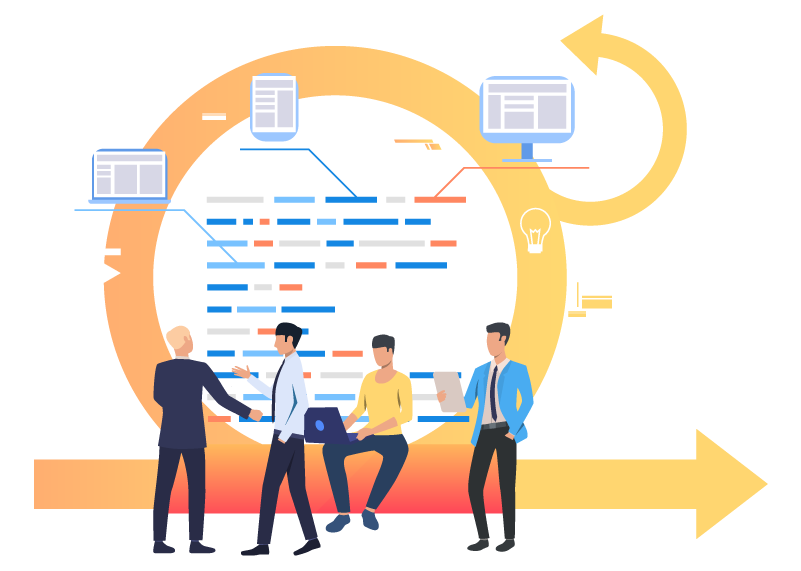
Now it’s time to build. This is the main construction phase where the strategic plans and design mockups are transformed into a functional application. Most modern teams follow an agile approach, breaking the massive project down into smaller, manageable chunks called “sprints.”
This method allows for constant feedback and course correction. Instead of disappearing for months and returning with a finished product, you see tangible progress every couple of weeks. It gives you the flexibility to make adjustments along the way, ensuring the CRM perfectly aligns with your needs as they evolve.
This phase is also when the critical integrations are built. Your new CRM gets connected to all the other tools your business depends on, creating a single, unified system where data flows freely.

Testing and Deployment
Before the big launch, the CRM goes through a battery of tests to hunt down and squash any bugs. This isn’t just a quick check. It involves:
- Functional testing to make sure every feature works as intended.
- Integration testing to confirm data moves seamlessly between connected systems.
- User acceptance testing (UAT), where your own team gets their hands on the software to give it the final green light.
Once it passes with flying colors, the system is deployed. A great partner will manage a smooth, phased rollout to avoid disrupting your daily operations. And the journey doesn’t end at launch; ongoing support and maintenance are essential for handling updates, adding new features, and making sure the platform keeps delivering value as your business continues to grow.
What a Modern Custom CRM Should Actually Do
When you hire a team for CRM software development services, you’re not just buying a piece of software. You’re building a system with features that actively help your business grow. We’ve moved far beyond simple contact lists. A modern custom CRM is the central nervous system for your sales, marketing, and support teams.
The right features change how you do business, turning messy data into clear insights and automating the repetitive tasks that drain your team’s energy. Let’s look at the must-have features that make a CRM a true high-performance tool.

A Single Source of Truth for Customer Data
At its heart, a great custom CRM breaks down information barriers. Think of it as one central dashboard where your team can see everything related to a customer. Every marketing email they’ve opened, every support ticket they’ve filed, and every purchase they’ve made, all in one place. This 360-degree view is the foundation.
This complete picture helps your team have smarter, more personal conversations. A support agent can see a customer’s full history before they even say hello. A salesperson knows exactly which blog posts or webinars a lead has already seen. No more flying blind.
An Automation Engine That Works Your Way
One of the biggest wins with a custom CRM is its ability to automate your specific workflows, not some generic template. This is about more than just sending automated follow-up emails. A well-built automation engine can manage complex, multi-step processes that are unique to how you operate.
Just imagine what you could do:
- Smart Lead Routing: Instantly send new leads to the right salesperson based on their location, industry, or even their product interest.
- Automatic Task Creation: When a deal moves to the “Proposal Sent” stage, the CRM can automatically create a follow-up task for the sales rep and a notification for the legal team.
- Self-Updating Records: The system can automatically update a contact’s information when they fill out a new form or open a specific email, keeping your data fresh without manual entry.
A custom automation engine doesn’t just save time—it ensures your best practices are followed every single time. It’s like a safety net that guarantees no lead gets dropped and every critical step is taken.
Analytics and Reporting That Tell a Story
Off-the-shelf CRMs give you generic reports. A custom solution gives you business intelligence that’s built for you. You can design dashboards that track the key performance indicators (KPIs) that actually matter to your business, not some industry average.
This lets you see your data in a way that provides clear, actionable answers. You could build a report that directly links your marketing campaign spending to new revenue, or one that pinpoints exactly where slowdowns are happening in your customer support pipeline. As we’ve seen in our own client cases, this level of personalized reporting is what helps leaders make smart, data-backed decisions that push the company forward.
Choosing Your CRM Software Development Partner
The success of your custom CRM project really boils down to one thing: the team you choose to build it. Picking the right partner for CRM software development services is about so much more than just their coding ability. You’re looking for a team that genuinely gets your business goals and can turn them into a powerful, reliable tool. This requires a strong background in custom software development and a deep understanding of business processes.
This decision is a big deal, especially for larger companies. It turns out that a huge chunk of CRM spending—about 73.8%—comes from enterprises with over 1,000 employees. These massive projects often involve tricky integrations and one-of-a-kind features, which is why finding a specialized development partner is so important. You can dig into more of these CRM market stats over on kixie.com.
Key Qualities to Look For
The best partners act less like hired coders and more like strategic advisors. They should be able to guide you through the maze of a complex project, taking your vision and making it a reality.
Here are a few non-negotiables to look for:
- Deep Technical Expertise: The team must know their way around modern development platforms, cloud infrastructure, and database management. They should be able to confidently recommend the right tech stack for your specific needs, not just what they know best.
- Proven Industry Experience: Has they built solutions in your industry before? A partner who already understands your unique challenges, compliance headaches, and day-to-day workflows is worth their weight in gold.
- A Transparent Development Process: Look for a team that lives and breathes Agile methodologies. This means you get regular updates, can give feedback at every step, and have the flexibility to adjust as the project unfolds.
Choosing a development partner is like hiring a key executive. You need someone with the right skills, a shared vision for the future, and a communication style that builds trust and alignment across your entire organization.
Asking the Right Questions
A solid portfolio and clear communication are table stakes, but you need to go deeper. A truly capable partner should be able to explain exactly how they tackle challenges and deliver real value. Our guide on digital transformation consulting services offers a helpful framework for seeing how potential partners line up with your long-term strategy.
At the end of the day, you’re not just looking for someone to build software. You need a partner who can help you innovate, grow smartly, and create a CRM that gives you a genuine edge over the competition.
Got Questions? We’ve Got Answers
Let’s tackle some of the most common questions we hear about building a custom CRM from the ground up.
What’s the Real Cost of Building a Custom CRM?
This is the big one, and the honest answer is: it depends. The price tag for a custom CRM can range dramatically based on how complex it is, what features you need, and how many other systems it needs to talk to.
A more straightforward system with core functionalities might start in the low tens of thousands. However, for a sophisticated, enterprise-level platform packed with AI-driven features, you could be looking at a six-figure investment or more. It’s helpful to think of it less as a cost and more as a direct investment in your company’s growth and efficiency.
How Long Until My Team Can Use It?
The development timeline really hinges on the project’s scope. If you’re looking for a Minimum Viable Product (MVP) with just the essential features, we can often get that into your team’s hands within 3-6 months. This gets you up and running quickly, delivering value right away.
For a comprehensive, full-scale CRM loaded with custom modules and deep integrations, the journey is naturally longer—typically 9-12 months or even more. We prefer working in an Agile way, which means we release features in cycles. This lets you see and use parts of the system early on, providing feedback that shapes the final product.
Is a Custom-Built CRM Really Better Than Something Like Salesforce?
This is less about which is “better” and more about which is the “right fit” for you. Big-name platforms like Salesforce or HubSpot are fantastic tools. They’re powerful, reliable, and perfect for businesses whose processes fit neatly into a standard model.
But what if your business doesn’t fit a standard model?
That’s where a custom CRM shines. If you have unique sales cycles, need to integrate with proprietary software, or want to build a specific feature that gives you an edge over the competition, custom is the way to go. You get complete control, a system that scales exactly how you need it to, and a workflow that mirrors how your team actually works—not how a software vendor thinks they should.
Frequently Asked Questions (FAQ)
1. Why should I choose custom CRM development over an off-the-shelf solution?
Custom CRM development is ideal when your business has unique workflows, specific integration needs, or requires proprietary features that give you a competitive edge. Unlike off-the-shelf products that force you to adapt, a custom CRM is built around your processes, enhancing efficiency and scalability.
2. Can a custom CRM integrate with my existing software (ERP, marketing tools, etc.)?
Absolutely. One of the primary advantages of a custom CRM is its ability to integrate seamlessly with any third-party or proprietary software your business relies on. This breaks down data silos and creates a single, unified source of truth for all customer-related information.
3. What is the role of AI in custom CRM development?
AI transforms a CRM from a passive database into a proactive, intelligent tool. It can power features like predictive lead scoring, automated customer segmentation, AI-driven sales forecasting, and sentiment analysis to provide deeper insights and automate complex decisions. As a leading AI solutions partner, we specialize in embedding these capabilities.
4. How do you ensure the security of my data in a custom CRM?
With a custom CRM, you have complete control over security protocols. We can implement role-based access controls, end-to-end encryption, and other measures designed to meet your specific industry compliance requirements (like HIPAA or GDPR) and internal security standards.
Ready to build a CRM that’s perfectly aligned with your business goals? Partner with Bridge Global to transform your customer relationships and unlock new levels of efficiency. Get in touch with us today.