



A Guide to AI-Driven Clinical Decision Support
AI-driven clinical decision support (AI-CDSS) is more than just a new piece of technology; it’s a co-pilot for healthcare professionals. These systems work alongside clinicians, analyzing massive amounts of patient data to offer incredibly precise, relevant insights right when they’re needed most. The key is that they enhance, not replace, the invaluable judgment of a human expert.
What Is AI-Driven Clinical Decision Support?
Think of it this way: a traditional clinical decision support (CDS) system is like a digital textbook. It’s a great reference, full of established rules and guidelines, and perfect for flagging straightforward issues like drug interactions.
Now, imagine an AI-driven clinical decision support system as a seasoned consultant. This consultant has not only read that textbook but has also reviewed every similar case your hospital has ever seen and deeply understands the specific context of the patient sitting in front of you. That’s the leap we’re talking about.
This smarter form of CDS goes far beyond static, “if-then” rules. It uses machine learning to process a huge range of data in real-time, from structured lab results and vitals to unstructured information like doctor’s notes, medical images, and even genomic data. By spotting subtle patterns that are nearly impossible for a person to see, an AI-CDSS can provide recommendations tailored to that one individual.
At its core, the goal is to give clinicians superpowers, leading to major improvements across the board:
- Sharper Diagnostic Accuracy: AI models can sift through symptoms and test results, comparing them against millions of data points. This helps surface potential diagnoses that might be missed, cutting down on human error.
- Truly Personalized Treatment: Instead of relying on one-size-fits-all protocols, AI-CDSS can suggest therapies fine-tuned to a patient’s unique genetic makeup, lifestyle, and history.
- Proactive Patient Safety: These systems are getting incredibly good at predicting risks like sepsis, hospital-acquired infections, or adverse drug reactions before they happen. This allows for proactive care that can, quite literally, save lives.
This move toward intelligent, data-backed healthcare isn’t just some tech upgrade. For any organization focused on delivering the best possible patient outcomes, it’s becoming a strategic necessity. As a healthtech software development partner, we’ve seen firsthand how properly integrated AI can completely elevate a clinic’s or hospital’s capabilities.
By translating raw data into meaningful intelligence, AI-CDSS provides clinicians with the complete picture they need to make faster, more confident decisions.
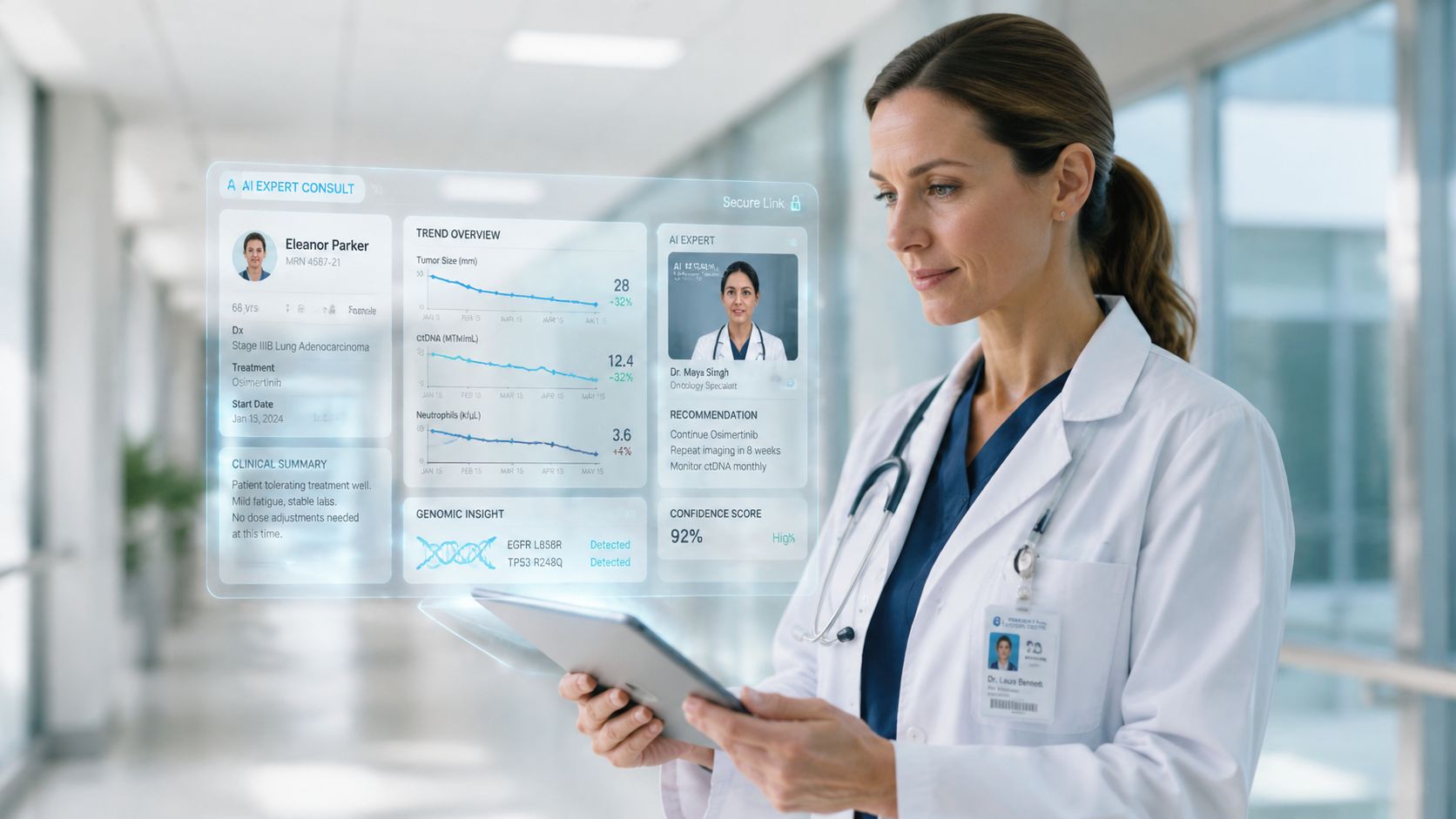
How AI-Driven CDSS Is Elevating Diagnostics and Patient Care
It’s helpful to think of modern AI-driven Clinical Decision Support Systems (CDSS) not as simple pop-up alerts, but as an intelligent co-pilot for clinicians. By constantly sifting through immense and complex patient data in real time, these systems are fundamentally improving how accurately we diagnose conditions and how effectively we can tailor treatments.
This isn’t just a theoretical benefit; we see its impact in some of the most critical areas of medicine.
Take sepsis, a condition where every hour can mean the difference between life and death. An AI-CDSS can keep a vigilant eye on a patient’s vital signs and lab work, catching the almost imperceptible patterns that signal a decline. This allows clinical teams to step in much earlier, well before the patient’s condition spirals into a full-blown crisis.
These systems are also becoming incredibly adept at predictive analytics. By analyzing a hospital’s historical data, an AI model can flag patients who have a high probability of being readmitted shortly after discharge. With that knowledge, care teams can put targeted post-discharge plans in place, which is a win for both patient health and the hospital’s bottom line.
Boosting Precision and Efficiency in Key Workflows
One of the most visually impressive applications of AI-driven clinical decision support is in medical imaging. AI algorithms can review X-rays, CT scans, and MRIs with a level of speed and precision that’s simply not humanly possible, highlighting suspicious areas for a radiologist’s expert review. This is a game-changer for early cancer detection, where finding a tiny nodule at its earliest stage can completely rewrite a patient’s future. As we explored in our guide on AI use cases in healthcare diagnostics, this is just the tip of the iceberg.
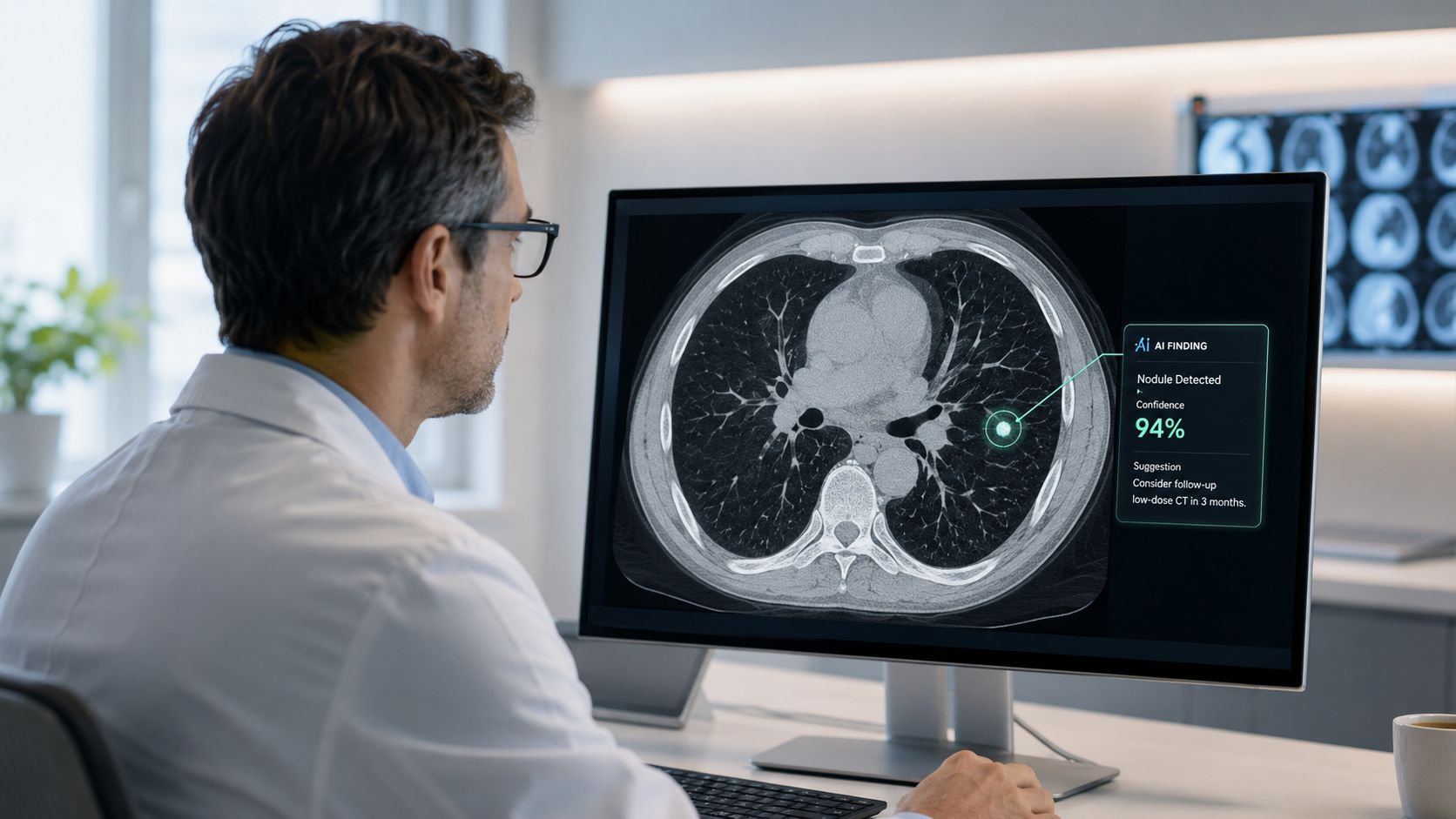
The numbers back this up. A recent pooled analysis of 50 different studies found that AI achieved a 92% diagnostic accuracy rate in critical care settings. For comparison, clinicians working without AI assistance had a 78% accuracy rate. What’s particularly interesting is the AI’s high specificity (81.9%), meaning it’s excellent at correctly ruling out conditions and helping avoid unnecessary procedures. This shows that while clinical oversight is still essential, the AI is an incredibly powerful tool for augmenting a doctor’s judgment.
By automating the tedious work of pulling data and summarizing long patient histories, AI-CDSS gives clinicians their time back. This isn’t just about efficiency; it’s a direct assault on burnout, freeing up our best minds to focus on what they do best: critical thinking and direct patient care.
This powerful combination of greater precision and smarter workflows is precisely why so many organizations are moving toward building custom solutions. When an AI tool is tailored to a hospital’s specific needs and integrated seamlessly, it becomes a true amplifier of human expertise, not just another piece of software.
Building Trust in AI Systems for Healthcare
For any AI-driven clinical decision support system to be successful, it has to earn the one thing that’s hardest to get: the trust of the clinicians who use it every day. This is a huge hurdle, especially when we’re talking about “black box” algorithms – the kind that spit out a recommendation without showing their work.
Let’s be realistic. If a doctor can’t see why an AI is suggesting a particular treatment, they aren’t going to bet their patient’s health on it. And they shouldn’t.
This is exactly why explainable AI (XAI) isn’t just a nice-to-have; it’s a core requirement. XAI models are built from the ground up to provide clear, understandable reasons for their conclusions. They turn that mysterious black box into a transparent tool, letting clinicians check the AI’s logic against their own years of experience.
Fostering Confidence Through Transparency and Collaboration
Building this kind of trust isn’t just about the tech, though. It’s about being transparent, validating the system rigorously, and making sure everyone is trained properly. A systematic review of 27 studies found that things like algorithmic transparency and even the reputation of the developers were crucial for getting healthcare workers on board. When clinicians feel they’re in control of the final decision, adoption follows.
One of the best ways to earn that buy-in is to involve clinicians right from the start. When doctors and nurses have a hand in designing the tool, they ensure the final product isn’t just accurate but actually works in the chaos of a real clinical setting. This collaborative process is a hallmark of effective custom software development.
A trustworthy AI-CDSS should act like a sharp medical resident: it presents the case, offers up the supporting evidence and data, and then defers to the attending physician for the final, informed call.
This approach keeps clinicians firmly in the driver’s seat and puts patient safety first.
Of course, with all this data flying around, privacy is a major concern. Handling sensitive patient information correctly is fundamental to building trust in any AI solution. For anyone looking to get this right, mastering data privacy with LocalChat is an excellent resource. By pairing transparent technology with a process that puts users first, we can build AI systems that clinicians don’t just use, but truly rely on.
Key Technologies and Architecture of an AI-CDSS
So, what’s actually going on under the hood of an AI-driven clinical decision support system? You can think of its architecture as a sophisticated pipeline, transforming raw, messy data into clear, actionable advice that appears right when a clinician needs it.
It all starts with the data. A massive, constant stream of information needs to be collected from every corner of the healthcare ecosystem. We’re talking about pulling from:
- Electronic Health Records (EHRs)
- Medical imaging archives (PACS)
- Live data from patient monitors and wearable tech
- Pharmacy and lab information systems
This mix of structured data, like clean lab results, and unstructured information, like a doctor’s handwritten notes, is the essential fuel for the entire system.
The Core Components That Power the System
From there, the data flows into the system’s central processing hub; the real brains of the operation. This is where a few key technologies work in concert. Machine learning models, like neural networks or random forests, are trained on enormous historical datasets. Their job is to find the subtle, complex patterns that point to potential health risks or identify the most effective treatment pathways.
Another critical piece is Natural Language Processing (NLP). NLP acts as a skilled interpreter, capable of reading and understanding unstructured text from sources like physicians’ notes or clinical trial reports. This unlocks vital context that a purely rule-based system would completely miss. Of course, a rock-solid infrastructure is non-negotiable; as we explored in our guide, a well-designed healthcare data pipeline architecture is what ensures all this data moves reliably.
At the end of the day, a successful AI-CDSS lives or dies by its ability to work with other systems. Interoperability standards like FHIR (Fast Healthcare Interoperability Resources) and HL7 are the shared languages that let different platforms communicate, ensuring insights are delivered without technical friction.
Building and refining these intricate components is a specialized skill. Expert AI development services are what turn these powerful concepts into a functional, reliable tool that can provide precise, context-aware recommendations at the point of care.
Delivering Insights Through Smart Integration
The last step is arguably the most important: getting the AI’s findings back to the clinician. This isn’t just about spitting out data; it requires smart healthcare integrations that embed the insights directly into the EHR or other clinical software. The goal is to present the information clearly and without causing “alert fatigue”, whether as a timely warning, a summarized patient report, or a prioritized list of potential diagnoses.
For many health tech startups, offering these advanced capabilities through a subscription is the most practical path forward. This makes expert SaaS product development a key strategy for making this powerful technology accessible to healthcare organizations of all sizes.
Where AI Is Making a Real Difference in Care and Operations
The real power of an AI-driven clinical decision support system isn’t in the theory; it’s in how these tools are already changing daily practice for the better, improving both patient outcomes and how hospitals run. Let’s move past the buzzwords and look at where this technology is making a tangible impact at the point of care.
One of the clearest wins is in medical imaging, specifically for early disease detection. Think about diabetic retinopathy. Certain AI models can analyze optical coherence tomography angiography (OCTA) images and predict the condition with 91%-98% accuracy. That kind of precision gives clinicians a crucial head start, allowing them to intervene long before vision loss becomes permanent. As organizations like the Agency for Healthcare Research and Quality (AHRQ) have found, these kinds of early, evidence-based interventions are a proven way to elevate the quality of care. For a deeper dive, Roche offers great insights on how AI is shaping diagnostics.
From Broad Strokes to Personalized Plans
Beyond just finding disease, AI-CDSS is fundamentally changing how we approach treatment plans and manage medications. The systems are brilliant at flagging patients who need a closer look or a more customized care strategy.
Here are a few key examples:
- Smarter Medication Management: An AI can digest a patient’s entire history – medications, lab results, even genetic markers – to warn of potential adverse drug reactions or suggest better dosing for high-risk drugs.
- Predicting Future Risk: Some algorithms can analyze subtle patterns in post-treatment data to predict the likelihood of a lung cancer relapse, shifting care from reactive to proactive monitoring.
- Fine-Tuning Doses: For tricky medications like anticoagulants, which have a very narrow therapeutic window, AI can recommend a precise dose based on an individual’s unique metabolism, dramatically cutting the risk of complications.
What we’re seeing is a fundamental shift from reactive to proactive medicine. When you can forecast risks and tailor interventions with this level of detail, you empower clinicians to stay a step ahead, which directly translates to better patient safety and outcomes. Our own client cases highlight how these custom-built solutions deliver measurable results in the field.
These tools also provide a huge lift on the operational front by easing the immense mental burden on healthcare professionals. Imagine an AI-powered search that can comb through massive libraries of dense medical literature and deliver a concise, evidence-based answer in seconds. It’s happening now. AI can even help refine complex processes by providing data-driven insights that help streamline a patient’s recovery plan.
Ultimately, this frees up precious time, letting doctors and nurses get back to what they do best: focusing on direct patient care and making those critical human decisions.
How to Implement an AI-Driven Clinical Decision Support System
Getting an AI-driven clinical decision support (AI-CDSS) system up and running isn’t a flip of a switch. Think of it as a carefully planned expedition, not a single leap. A solid, phased strategy is what separates a successful implementation from a frustrating and expensive failure.
It all starts with discovery and a clear strategy. Before you even think about models or code, you have to answer some fundamental questions. What specific clinical problem are you trying to solve? Is it about flagging potential sepsis cases earlier? Or maybe reducing preventable hospital readmissions? Pinpoint one high-impact area to start. A narrow focus for a pilot project is always the best bet. This is also when you need to take a hard look at your data: what you have, where it lives, and what you might be missing.
From a Focused Pilot to Full-Scale Integration
Once you have a well-defined goal, you can move on to selecting and developing the right AI model. You don’t always have to build a complex model from the ground up. In many cases, fine-tuning an existing foundation or using a more straightforward approach is more effective. The goal is to find the right tool for the job, one that fits your specific problem and the data you actually have.
The secret to a successful rollout is to start small. A tightly focused pilot project is the best way to prove the concept works, get clinicians and administrators on board, and iron out all the wrinkles before you even think about expanding. It builds confidence and momentum.
Finally, you get to the most critical part: workflow integration and continuous oversight. The most brilliant AI tool is useless if it’s a pain for clinicians to use. It has to fit naturally into their existing EHR workflows, offering helpful insights without adding extra clicks or contributing to alert fatigue.
Once you go live, the work isn’t over. You need to keep a close eye on the system’s performance to watch for model drift and gather feedback from your users. This constant loop of monitoring and refining is what ensures the tool stays accurate, useful, and trusted by your clinical teams for the long haul.
Frequently Asked Questions
It’s natural to have questions when you’re thinking about bringing AI into a clinical setting. Let’s tackle some of the most common ones that come up.
What’s the Real Difference Between Traditional and AI-Driven Clinical Decision Support?
Think of a traditional Clinical Decision Support (CDS) system as a very good, but very rigid, checklist. It operates on simple “if-then” rules that humans have programmed. For example, “if patient is prescribed drug X, and is also allergic to drug Y, then trigger an alert.” It’s incredibly useful for catching straightforward, known issues.
An AI-driven clinical decision support tool, on the other hand, is more like an experienced consultant. It learns from vast, complex datasets: EHR notes, lab results, imaging, genomics, to spot subtle patterns a human might miss. Instead of just following rules, it can make educated predictions, like identifying patients at high risk for sepsis before clear symptoms appear, or suggesting a personalized treatment path based on thousands of similar patient journeys.
How Can We Be Sure an AI-CDSS Is Safe and Ethical to Use?
This is the most important question, and it’s something we build into the very foundation of any system. It boils down to a few core principles:
- Making the AI’s “thinking” transparent: Clinicians need to trust the recommendations, which means the system must provide the “why” behind its suggestions, a concept known as Explainable AI (XAI).
- Tough, real-world testing: Before it ever goes live, the model must be rigorously validated against diverse patient data to prove it’s accurate and fair. This doesn’t stop after launch, either.
- Establishing clear rules of engagement: Everyone needs to know who is accountable. Policies must be in place for when and how a clinician can override an AI’s suggestion.
- Watching for performance drift: We have to continuously monitor the AI to ensure its accuracy doesn’t degrade and that it doesn’t accidentally introduce or amplify biases over time.
Ultimately, an AI-CDSS should always be seen as a powerful co-pilot, not the pilot. It enhances clinical judgment; it never replaces it. Working with a partner that has deep experience in custom healthcare software development is vital to get these complex safety and compliance details right.
Where Do I Even Begin with Implementing an AI-CDSS?
The most common mistake is trying to do too much at once. The absolute best first step is to pick one specific, high-value problem to solve. Don’t set out to “implement AI”; instead, aim to “reduce 30-day readmissions for congestive heart failure patients” or “speed up the diagnostic process for a specific rare disease.” A discovery workshop is often the perfect setting for zeroing in on this initial target.
Once you have your problem, the next step is a realistic look at your data and infrastructure. From there, a focused pilot project is the smartest path forward. It lets you prove the value quickly, learn from the process, and build enthusiasm and support for a wider rollout. Our own AI implementation roadmap is built around this very philosophy of starting small, proving value, and scaling intelligently.
Ready to see how AI-driven insights could elevate your standard of care? Bridge Global is an expert healthtech software development partner dedicated to building custom AI solutions that are secure, compliant, and designed for real-world clinical impact.

About Stephanie Cornelissen
Stephanie Cornelissen is a Technical Solutions Consultant with strong experience helping organizations navigate complex digital change. She works closely with teams to align business goals with practical, scalable technology solutions. With expertise in system architecture, integrations, and emerging technologies, she focuses on solving real-world problems through thoughtful execution. She enjoys working where technology meets business strategy and measurable growth.
View all posts by Stephanie Cornelissen →